|
|
||||||||||||||||||||||||||||||||||||||||||||||||||||||||||||||||||||||||||||||||||||||||||||||||||||||||||||||||||||||||||||||||||||||||||||||||||||||||||||||||||||||||||||||||||||||||||||||||||||||||||||||||||||||||||||||||||||||||||||||||||||||||||||||||||||||||||||||||||||||||||||||||||||||||||||||||||||||
|
|
Technical Project “Object
Andrei Tarasenko
Abstract This article examines the technical project “Object 432” (April 1961), focusing on the design decisions that shaped the mobility and maneuverability of what would become the T-64 main battle tank, as well as the debates surrounding those decisions. Particular attention is given to the powerplant, transmission, suspension, and track system, which were the most controversial elements of the tank. The paper analyzes criticism directed at the 5TD/5TDF opposed-piston diesel engine, the ejector cooling system, and the perceived lack of growth potential in the suspension, and shows how these issues influenced parallel design efforts in Nizhny Tagil and Leningrad, leading to the T-72 and T-80. From a conceptual perspective, the article argues that despite structural differences, the T-64, T-72, and T-80 shared a common ideological foundation formulated by A. A. Morozov in the 1960s, a concept that remains relevant due to the absence of a fundamentally new tank employment doctrine. Using archival documents, technical data, and contemporary assessments, the article concludes that while Object 432 suffered from significant reliability and production challenges, its overall concept proved viable and forward-looking. The T-64’s long production run and capacity for modernization demonstrated that its key design solutions, particularly in mobility and layout, were not only justified for their time but influential for subsequent generations of main battle tanks.
Perhaps
the greatest criticism of the T-64 tank concerned the solutions adopted to ensure
mobility and maneuverability. The suspension was considered to lack sufficient
growth margin for an increase in vehicle mass. The engine was criticized for
insufficient reliability and manufacturing complexity. The ejector cooling
system was also criticized, allegedly for failing to provide adequate cooling
at increased engine power.
These elements of the tank were subject to
attempts at redesign by the design bureaus in Nizhny Tagil and
A tank concept is a system of views on the
nature of possible combat operations and the formulation of goals and tasks
facing armored forces in the near and medium-term future. From a conceptual
standpoint, the Nizhny Tagil T-72 and the Leningrad
T-80 did not differ from the T-64. Structurally they were different;
conceptually they were not. The concept of the T-64 tank proposed by A. A. Morozov was fully relevant to its time—the 1960s–1970s.
History has decreed that nothing fundamentally new has yet been introduced into
serial production to replace it; the problem lies not only in funding, but also
in the absence of a coherent ideology for tank employment in future wars.
Was the bet on the 5TD engine correct? History
itself likely provided the best answer:
“As a result of our joint work with our Kharkiv colleagues, a coordinated decision was made to
adopt for further development a unified powerpack with the Kharkiv 6TD-2 engine [a development of the
5TD concept], but with all tank engine systems developed by the Tagil designers.” The United States also placed its bet on a
family of two-stroke opposed-piston diesel engines (3-, 4-, and 6-cylinder)
under the Advanced Combat Engine (ACE) program, which in essence represents a
modern technical reincarnation of the concepts embodied in the 4TPD, 3TD, 5TD,
5TDF, and 6TD engines [2].
Issues related to testing the ejector cooling
system of the T-64A tank with the V-46 engine are examined in source [3].
Engine
Compartment
MANEUVERABILITY
Increasing the mobility and maneuverability of armored forces in terrain
conditions is, given modern means of warfare, one of the primary and long-overdue tasks.
Solving this task is possible only by increasing the average
cross-country speed of tanks, which for vehicles currently in service lies in
the range of 20–25 km/h—clearly inadequate for the required tempo of combat
operations.
Therefore, a number of measures were implemented in this project which,
taken together, are intended to sharply increase the average speeds of the “
The maximum speed of the new tank is specified at up to
Accordingly, the project adopted a 700 hp engine, and the tank mass was
set at 34 tons, ensuring the required specific power of over 20 hp/t.
The main provisions concerning the powerplant and suspension that determine the maneuverability of the tank are outlined
below.
POWERPLANT
The “
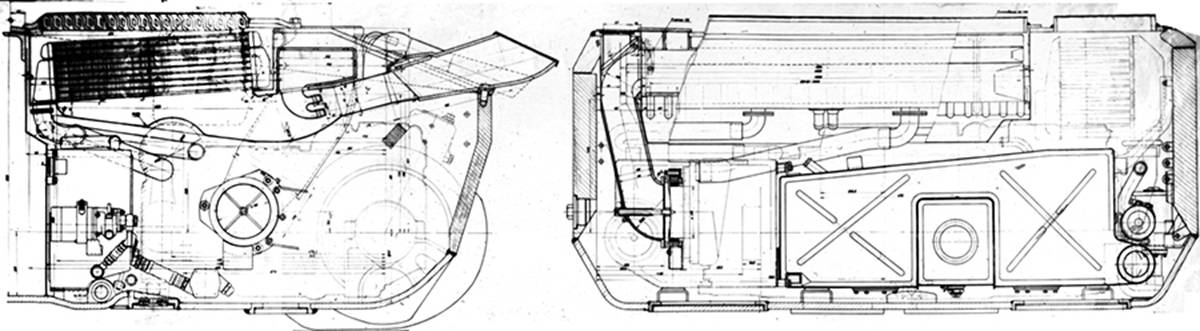
The general layout of the powerplant and the
engine-transmission compartment was retained as on the “
Unlike the “
In addition to improving access, the rear placement of the cooling
ejector made it possible to optimize its geometric parameters, eliminate
recirculation losses, improve the operating conditions of the ejector itself
(especially at high speeds), and contribute to the protection of the louver
system.
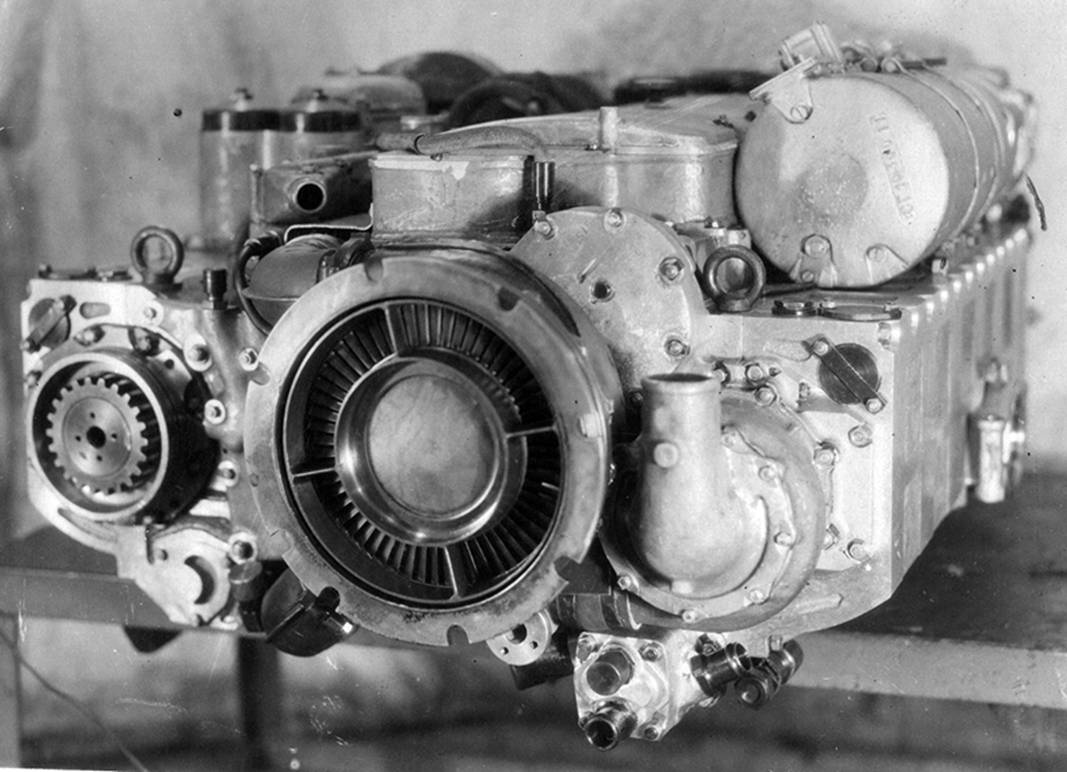
5TDF
engine (Item “
Note
The 5TDF engine initially represented the most problematic aspect of the
new tank. At the height of work on the “
Diary entry by A. A. Morozov, 18 April 1961: Speaking of armament, one cannot ignore everything else that restrains
tank development in our country. First and foremost—engines. We simply do not
have them, and it is unknown when we will. Aviation developed as a result of
progress in engines, but we have no engines and do not seriously develop them.
Formally there are research institutes, design bureaus, factories—but engines
are not being worked on, and research proceeds sluggishly. The 5TD is not a
hawk, not even a sparrow in the hand. At best, it may be obtained in 5–7
years.”
To describe the situation of that period, it is also worth quoting L. N. Kartsev (Prospects for Industry Development, Meeting
[Conference] at the State Committee for Defense Technology, 10–11 August 1960):
“Protection cannot yet keep pace with means of destruction, and mass
must not exceed 34 tons. The proposed layouts are unrealistic, not thought
through, and we know this from our own experience. These layouts disorient
chief designers. перспективные layouts must be made following the type of the 430, with improved means
of destruction. Our team is not capable of solving new complex tasks.”
At the same meeting, A. A. Morozov stated: And what are these views?
1.
The necessity of developing gun
armament and the futility of creating missile platforms before missile weapons
themselves are developed.
2.
The unnecessary nature of special
nuclear protection for a tank.
3.
A product should not be tied rigidly
to its mass.
TRANSMISSION
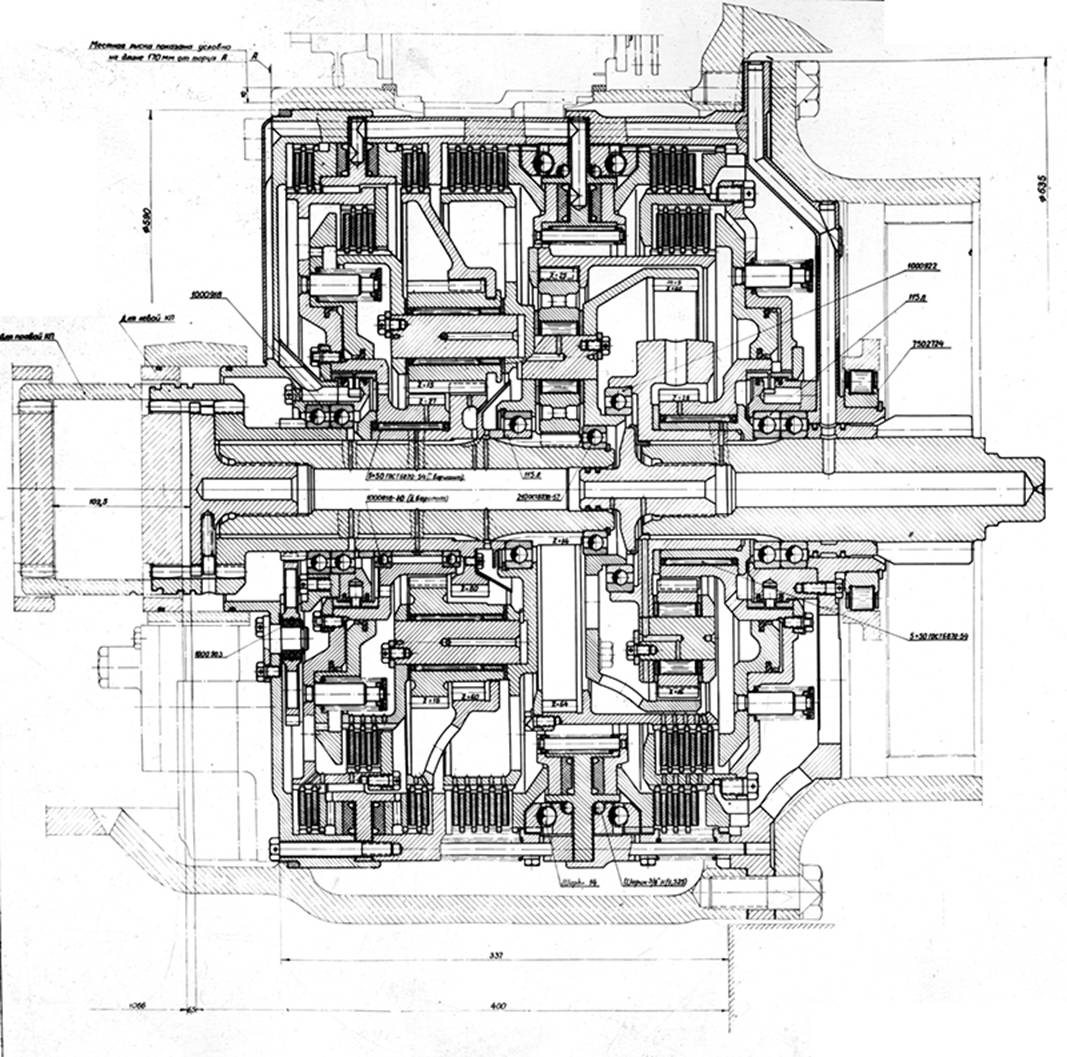
The “
Gear ratios were revised to suit the new speed range in order to ensure
higher travel speeds, and the final drive ratio was changed.
To allow use of the engine brake without depressing the clutch pedal,
the design of the engine-brake control units was revised.
Transmission control units were retained essentially unchanged from the
“
As follows from the provided dynamic characteristics, the tank with this
transmission achieves very high dynamic performance, with small gaps between
gears.
Transmission
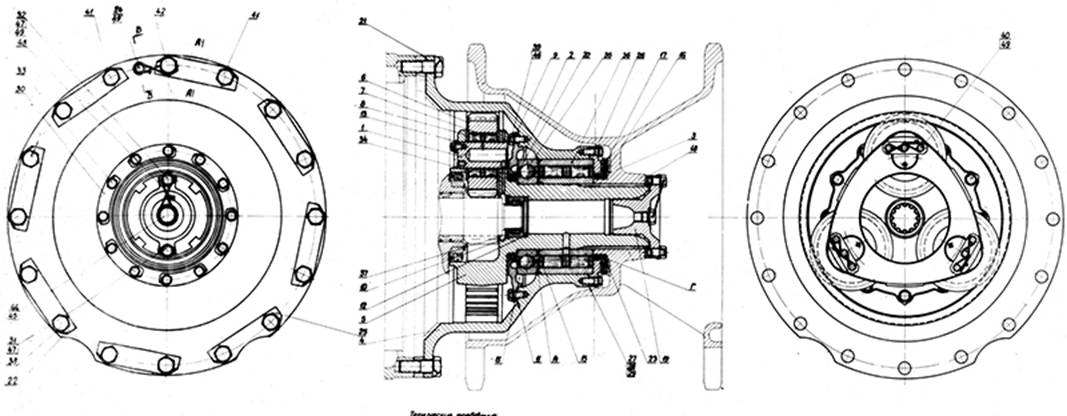
Final drive
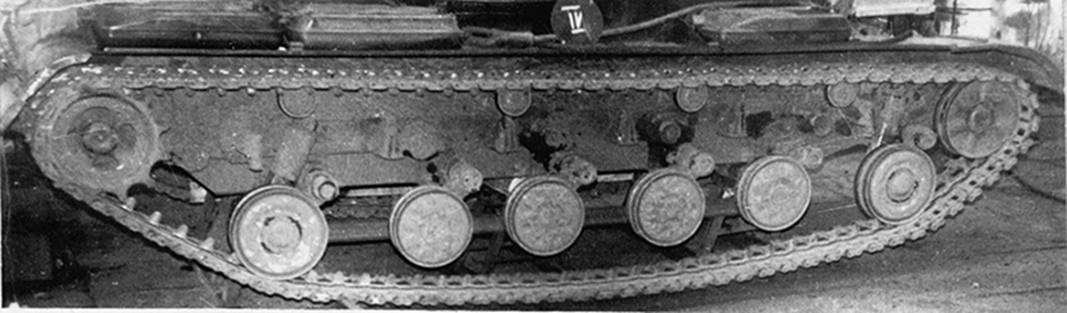
SUSPENSION
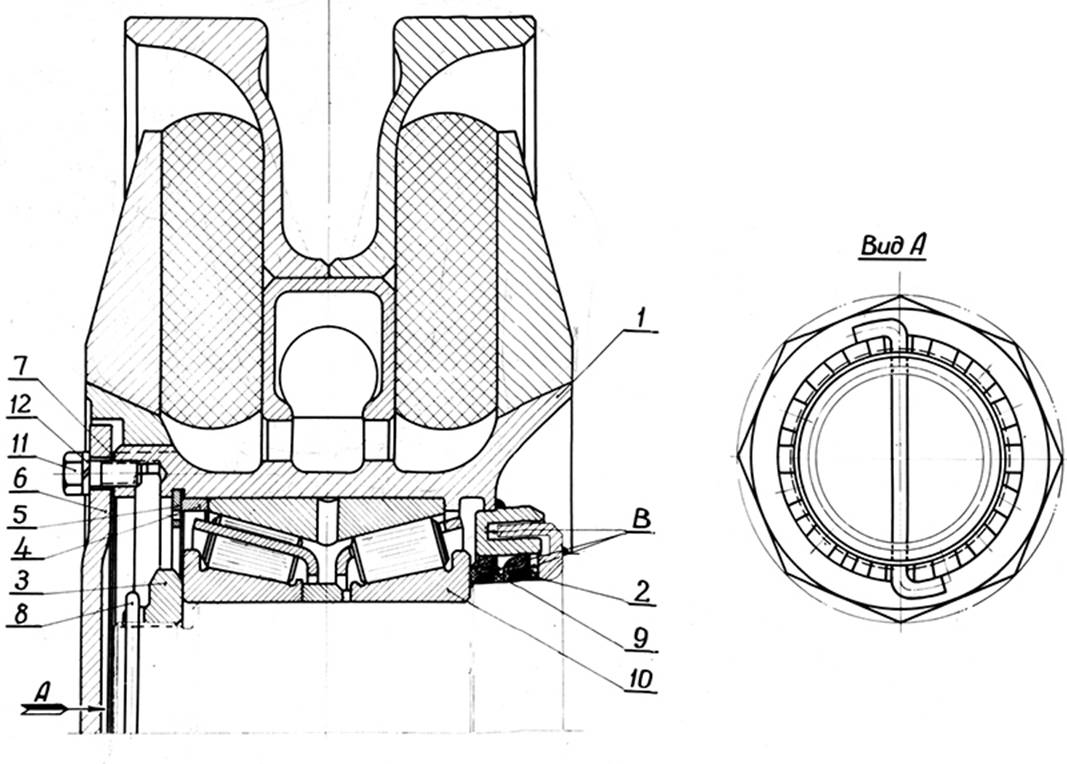
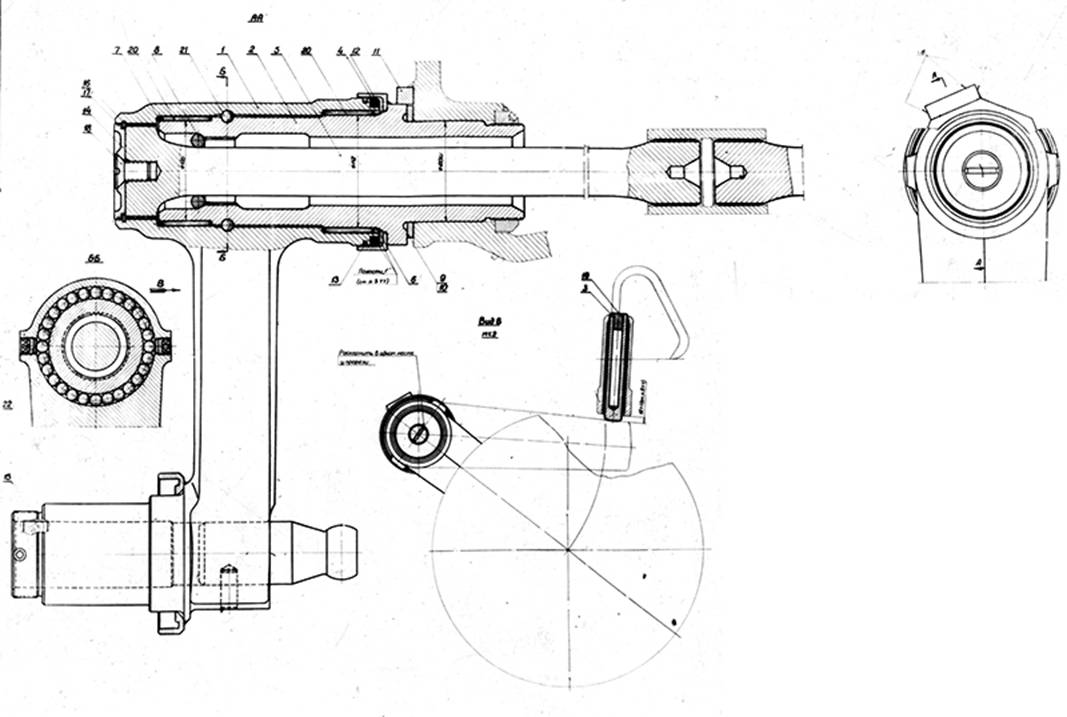
All major suspension components except the track were adopted in a design
similar to that of the “
Differences from the “
·
By
increasing the maximum stress in torsion bars to 13,200 kg/cm² (instead of
9,000 kg/cm²), the torsion bars of both sides were arranged coaxially and
terminate along the longitudinal axis of the vehicle.
·
To
reduce weight, the four central road wheels were made Ø500 mm (compared
to Ø550 mm for the outer wheels) and significantly lightened.
·
The
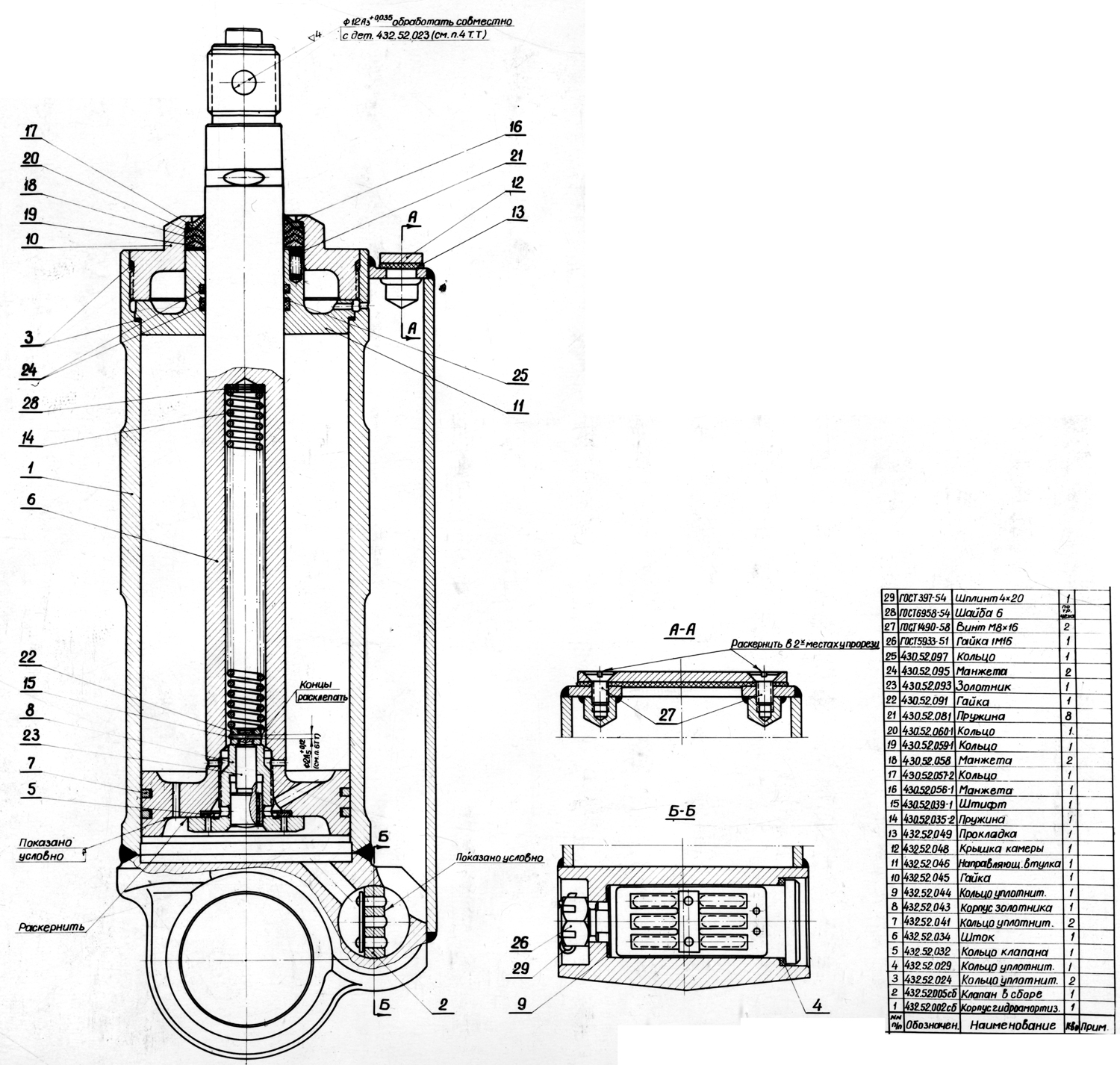
shock absorber design was changed; due to layout constraints, the cylinder
diameter was reduced to
·
Instead
of three return rollers, four per side were installed. The rollers were reduced
in diameter, lightened, and mounted on brackets welded to the hull sides.
Regarding ride smoothness, calculations and
practical test data from the “
Hydraulic shock absorber.
Support roller, outer.
Suspension balancing beam.
TRACK
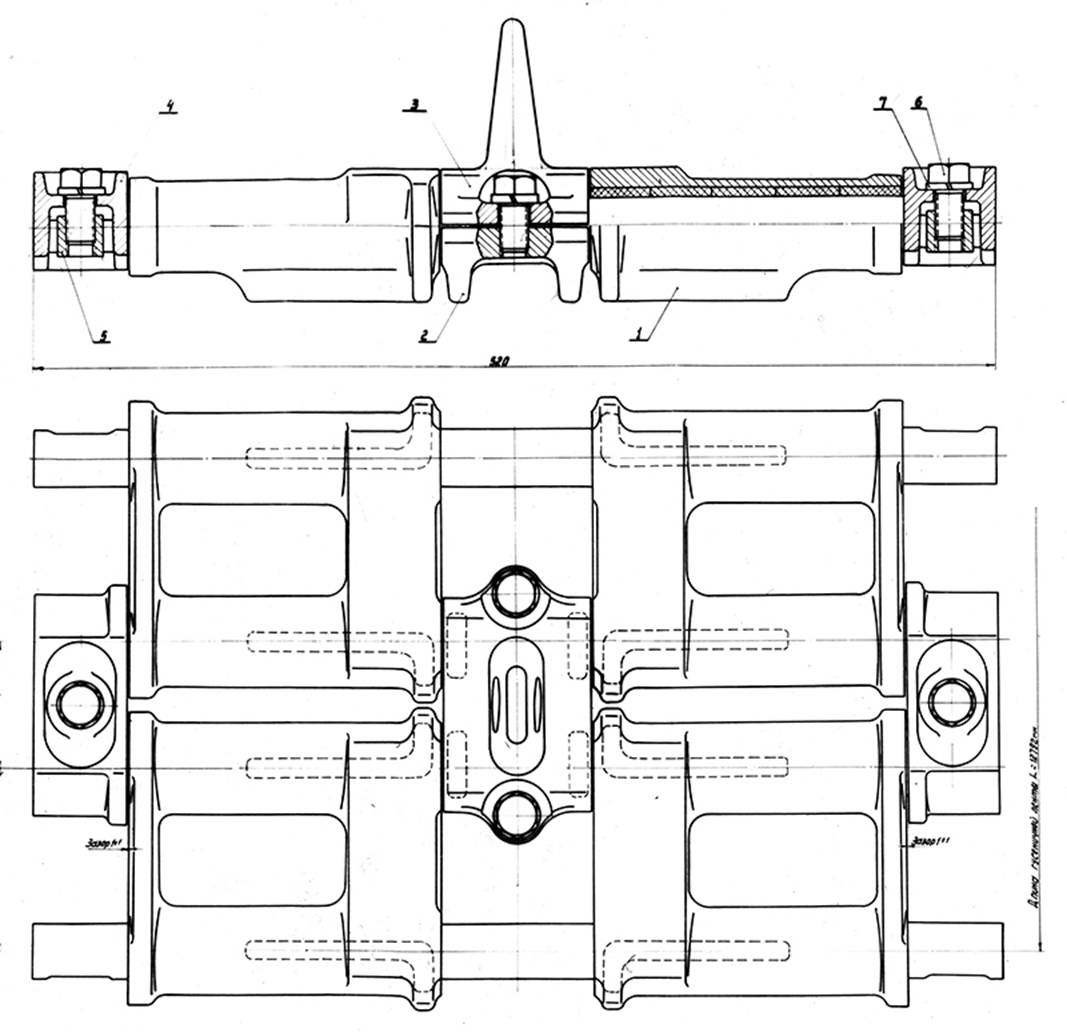
The track for the “
The track uses a proven rubber bushing size of Ø40×5 mm
(with a pin diameter of
Calculations by VNII-100 and experimental testing of individual track
elements showed satisfactory strength characteristics.
Encouraging results were also obtained from preliminary tests by
VNII-100 and the
·
At
40 km/h: ~0.90 (vs. 0.85 for tracks with open metal joints)
·
At 65 km/h: ~0.85 (vs.
~0.69)
Thus, at maximum speed, the use of this track should save approximately
100 hp.
The assembled track width is
The track (432.55.сб)
The track (432.55.сб) during
trials.
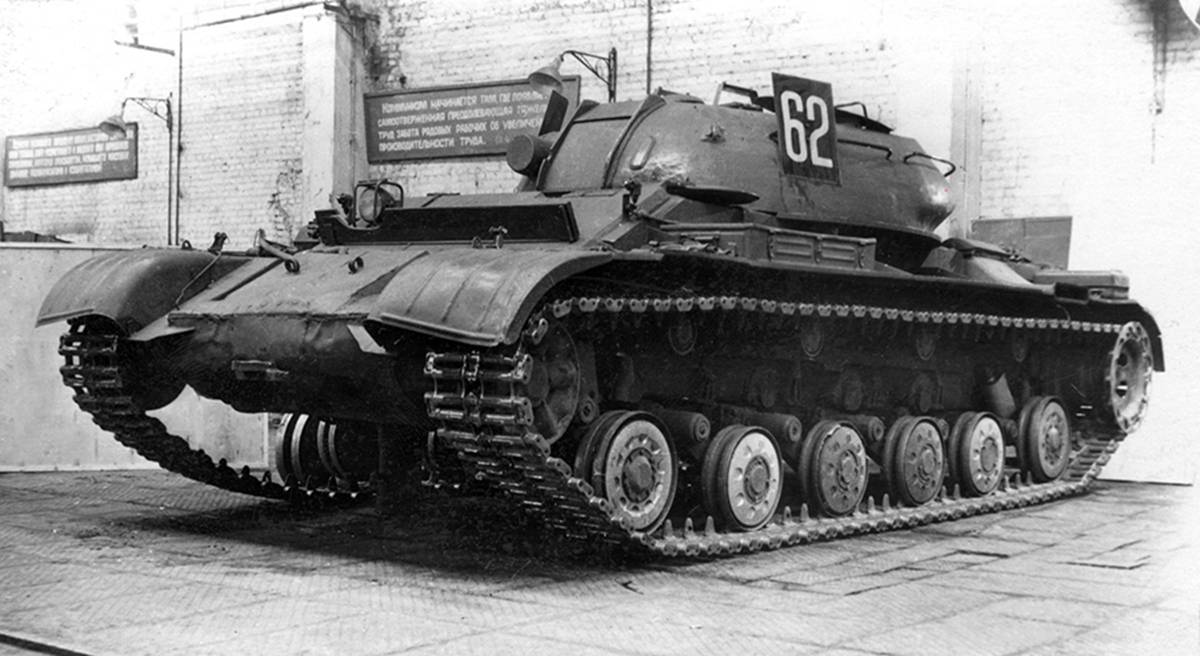
Testbed for trials of the running gear of
Object “
Ходовая часть, представленная в техническом проекте имела два амортизатора на крайних опорных катках, причем эти катки (первый и шестой)
были выполнены усиленными увеличенного (
Note: The running gear of the “
Nevertheless, it is a historical fact that
during the period of serial production—from the moment the tank was adopted
into service on 30 December 1966 by the decree of the USSR Council of Ministers
and the CPSU Central Committee No. 982-321ss until 27 December 1987, when the
last T-64BV left the assembly shop—the combat weight increased from 36 to 42.4
tons. The absolute increase in mass amounted to 6.4 tons, or 17.7 percent. Over
the entire life cycle of the tank (from adoption into service), the increase in
the mass of the running gear itself amounted to only 1.1 percent [5]. Compared
with the technical design project, the mass of the running gear increased (significantly) from 5,129 to
The running gear presented in the technical
design featured two shock absorbers on the outer road wheels; these wheels (the
first and sixth) were reinforced and had an increased diameter of
Taking into account the frequent braking of the
tracks (during turns, stops, and reverse movement), during which loads on the
idler wheels can reach up to 48 tons, their load is significantly higher than
that borne by the road wheels. Consequently, installing road wheels in the
idler position led to their more rapid failure. At the same time, the Dnepropetrovsk
Production Association “Dneproshina,” the main
supplier of road wheels for the KhZTM plant, lacked
the necessary equipment for their manufacture, and therefore idler wheels were
produced at the Barnaul Tire Plant.
This situation persisted for quite a long time
until a method was proposed in
Tactical and Technical Characteristics
Weight Breakdown (Grouped Summary)
Tank “
Variant
II of Tank “
|
No.
|
Additional components
|
Weight, kg
|
Remarks
|
1
|
TRLD equipment
|
200
|
|
2
|
Equipment mounting
|
25
|
|
3
|
Additional sight weight
|
22
|
|
4
|
Additional turret mass
|
20
|
|
5
|
Antenna armored housing
|
111
|
|
Tank weight (432 with TRLD):
|
|
34,322.35
|
(33,938.35 + 384) |
LIST
of principal organizations and enterprises
involved in the development and manufacture of the “
No.
|
Organization
|
Scope of work
|
1
|
Uralmash Plant
|
Development,
on the basis of the U-5TS gun, of the modified D-68 gun and manufacture of prototype
samples
|
2
|
Central
Research Institute No. 173 (TsNII-173)
|
Development
and manufacture of prototype samples of: the “Siren” stabilizer; TRLD
equipment
|
3
|
Central
Design Bureau No. 393 (TsKB-393)
|
Development
and manufacture of prototype samples of TPDMS-type gunner’s
sight–rangefinders and modified night sights
|
4
|
Plant No.
69
|
Development
and manufacture of prototype samples of T2-S type sights for the TRLD system
|
5
|
Research
Institute No. 24; Research Institute No. 6; Research Institute No. 147
|
Development
of separate-loading ammunition with a partially combustible cartridge case (“Zhelud”)
|
6
|
|
Development
of production technology and experimental refinement of various turret
designs with composite armor; manufacture of prototype turrets and hull armor
component sets
|
7
|
VNII-100
|
•
Development, experimental refinement, and manufacture of prototype air cleaners
|
•
Participation in the development of cooling, preheating, and
fighting-compartment heating systems, and experimental work on individual
units and components
|
|
|
• Joint development
with the plant of a rubber-metal joint track; conduct of all preliminary
studies and participation in prototype refinement
|
|
|
• Bench
testing of individual suspension components
|
|
|
• Research
into transmission operation using low-viscosity oil
|
|
|
•
Experimental work on metal-ceramic friction discs
|
|
|
•
Refinement of 12ST-70 batteries and development of new VKU units
|
|
|
• Participation
in the creation, manufacture, and refinement of a turret with ultraporcelain inserts
|
|
|
8
|
Research Institute of Plastics
|
Development
of fiberglass materials and anti-radiation liners; supply of prototype sets and
mastering of installation technology in the tank; substantiation and
selection of the tank’s anti-radiation protection; joint structural design of
the protection with the plant
|
9
|
Branch of VNII-100
|
Joint
development with the plant of comprehensive tank protection against
armor-piercing and HEAT projectiles; conduct of required research, testing,
and technology development; performance of necessary joint refinement work;
research and development of suspension torsion bars with τ =
13,250 kg/cm²
|
10
|
NIID
|
Participation
in the overall development of the 700 hp 5TDF engine; conduct of research,
experimental, and refinement work on individual engine units
|
11
|
Stalin Academy
|
Selection
and refinement, jointly with the plant, of the tank suspension system and
track layout; participation in the development of a new track; bench testing
of individual suspension components; participation in research on new
metal-ceramic friction alloys
|
12
|
NIIBT Proving Ground
|
Conduct
of research and testing of individual units and mechanisms, as well as
comprehensive system trials
|
13
|
VIAM
|
Development
of a new metal-ceramic alloy for transmission friction discs
|
14
|
MTZ
|
Refinement
and manufacture of prototype starter-generator units
|
The Final Stage of
the T-64’s Career
Over
the entire period of serial production, a total of 1,192 T-64 tanks were
manufactured, including:
Tanks
produced in 1964–1965 were written off by the late 1960s. The remaining
vehicles stayed in service for a long time, despite possessing a very
significant drawback—unique ammunition for the D-68 gun, which was not used by
any other artillery system of the Soviet Army.
Between
1977 and 1981, almost all T-64 tanks (Object “
In
the final years of the
Tanks withdrawn to the territory of
the
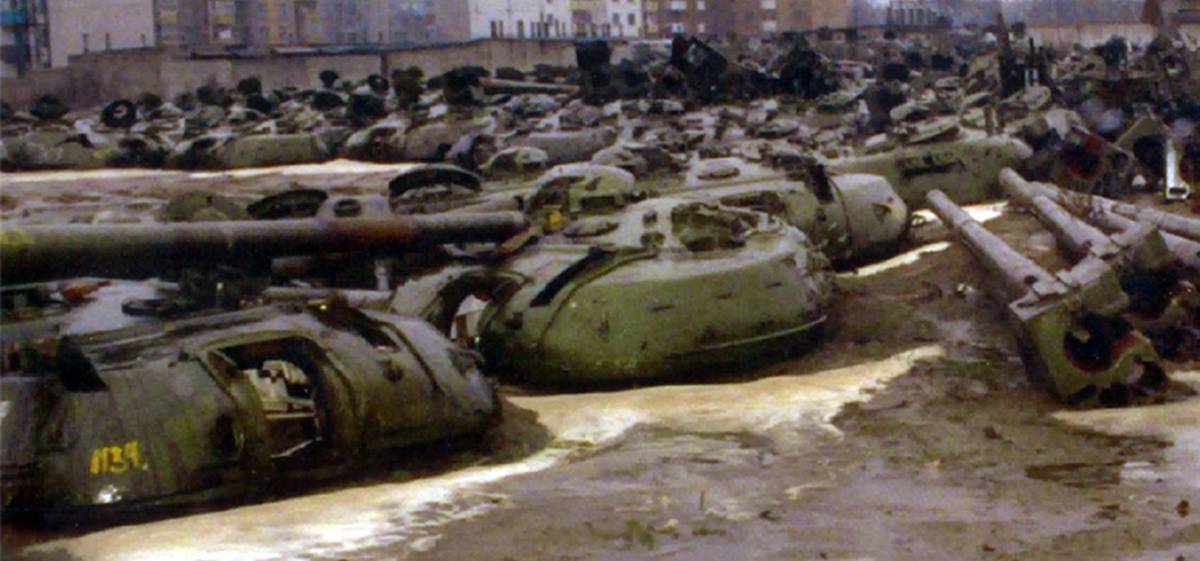
Object “
The conclusion of this
material may be illustrated by an excerpt from a speech delivered at a
special-production assembly at the Malyshev Plant on
12 January 1966:
“…All
of you witnessed how, last year, we were constantly the focus of attention from
numerous commissions and responsible representatives of the highest government
bodies. This is understandable: tanks for the country are the issue No. 2—tanks
come immediately after missiles, even ahead of aviation.
For
this reason, at a meeting of the Military Council, where I was to report,
Comrade L. I. Brezhnev directly asked me: ‘And was it the right decision,
Comrade Morozov, that we settled on your tank?’ I answered in the
affirmative, stating that we had gained time, moved ahead, discarded everything
unfit, and pulled sharply ahead—and that such an achievement is worth paying
for in funds, time, and labor.
However,
for the time being, all the deadlines granted to us have passed, and we have not
yet settled our debts nor confirmed our promises by deeds.
The rehearsals of the “
All of this has aggravated the overall situation at the plant and
intensified doubts within government circles.
We are still being forgiven for quantity, cost, and our lack of
organization, but as far as quality and reliability are concerned, this issue
never leaves the agenda of all organizations and remains the principal question
regarding the “
Unfortunately, we are not fighting for reliability vigorously enough,
substituting it with everything else and interfering with one another.
Designers, experimental engineers, and production personnel are all at fault.
We lack a common language and unity of action on this matter. This is neither
the place nor the time to rake over past mistakes. The main thing now is not to
repeat them. That is the purpose and task of today’s meeting.
One way or another, the Minister and the Head of the UNTV have given us
the last and final deadline for completing the refinement work—March of this
year, the opening day of the 23rd Congress of the CPSU. This honorable
assignment must become a socialist obligation and a report by the plant’s
workforce to the Central Committee of the CPSU, and the beginning of a new life
for our plant.
All organizational and preparatory work has already been completed, and
now the matter rests with fulfilling this task on time and with the highest
quality.
Our plant, comrades, is a pioneer of Soviet tank building, and its
workforce has repeatedly solved major and responsible tasks. Many of the
veterans present here have more than once been recognized by the Government,
and their names are treated with great respect and trust.
I have no doubt that our collective will also cope with this honorable
task with distinction, thereby further enhancing the glory of the
List of Sources Used:
1.
Chief
Designer Vladimir Potkin. Tank Breakthrough.
Collected Articles. Nizhny Tagil: DiAl Advertising and Publishing Group LLC, 2013.
2.
3.
Ejector Cooling System of a Power Unit with the
V-46 Engine. V. S. Dubov, V. A. Ivanov, L. S. Melnikov, G. A. Mikhailov, P. A. Osipov. Bulletin of Armored Vehicle Technology, 1976, No. 2.
4.
Report on the Results of a Study of Operating
Conditions and Reliability of the Running Gear of the T-64A Tank. Military Unit 68054, 1970.
5. V. V. Polikarpov, A. F. Pustovalov. History of the Improvement of the T-64 Tank During Serial Production. Bulletin of Armored Vehicle Technology, 1988, No. 11.
| ГЛАВНАЯ | НА ВООРУЖЕНИИ | ПЕРСПЕКТИВНЫЕ РАЗРАБОТКИ |
ОГНЕВАЯ МОЩЬ ЗАЩИТА ПОДВИЖНОСТЬ |
ЭКСКЛЮЗИВНЫЕ МАТЕРИАЛЫ | БИБЛИОТЕКА | ФОТООБЗОРЫ |