|
|
||||||||||||||||||||||||||||||||||||||||||||||||||||||||||||||||||||||||||||||||||||||||||||||||||||||||||||||||||||||||||||||||||||||||||||||||||||||||||||||||||||||||||||||||||||||||||||||||||||||||||||||||||||||||||||||||||||||||||||||||||||||||||||
|
|
History of Tank Development in the
Annotation
This article, based on extensive archival
documentation, presents a detailed and multi-perspective analysis of a pivotal moment
in Soviet tank development: the concurrent adoption of the T-64A and T-72 tanks
in 1973. It critically examines the decision-making process that led to the
abandonment of a unified tank model for the Soviet Army, instead establishing a
decades-long course of parallel production for different main battle tanks.
The core of the study rests on primary sources:
internal reports of the USSR Ministry of Defense, correspondence and memoranda
from military leadership (notably Marshal I. I. Yakubovsky),
official letters and technical reports from the Malyshev Plant management and Chief Designer A. A. Morozov,
and field trial records. This archival foundation allows the author to
reconstruct the arguments and rationales of all major stakeholders.
The article meticulously contrasts the
perspectives:
·
The Ministry of Defense's position, citing extensive field trial data from
1969-1973 to highlight persistent reliability issues with the T-64A's engine
(5TDF), transmission, and running gear, ultimately deeming it unsuitable for
mass production outside its native plant.
·
The Malyshev Plant and Design Bureau's defense, which presents its own statistical
data and lists hundreds of implemented design improvements, arguing that the
T-64A had reached satisfactory reliability by 1973 and that its shortcomings
were either overstated or in the process of being resolved.
·
The pivotal intervention of military leadership, encapsulated in Yakubovsky's 1973 letter listing seven "structural
deficiencies" of the T-64A, which served as the formal justification for
initiating parallel production of the T-72.
A significant portion of the analysis is
devoted to a point-by-point technical rebuttal by A. A. Morozov of the criticisms leveled in Yakubovsky's letter,
covering aspects such as operational range, ammunition handling, cross-country
mobility, and engine reliability. Furthermore, the article references later
declassified industry journal data (from the 1980s) to compare the long-term
reliability statistics of the T-64A, T-72, and T-80, challenging the
established narrative of the T-64A's inherent unreliability.
The conclusion posits that the events of 1973
were less a reflection of the T-64A's objective failure and more a result of
complex industrial, regional, and administrative factors within the Soviet
defense industry. The study asserts that the subsequent historical narrative
often relied on a "large-scale falsification" that overlooked the
T-64A's achieved technical level and the similar reliability challenges faced
by its successors in their early service years.
Pivotal 1973 – Part 1 On
January 22, 1973, by order of the
In
1972, 15 units of the 172M model with the V-46 engine underwent field trials,
followed by additional testing in various climatic zones. These trials
ultimately led to the adoption of the T-72 tank by the Soviet Army through the
CPSU and USSR Council of Ministers decree of August 7, 1973, № 554-172, and the
USSR Ministry of Defense order of December 15, 1975, № 217.
An
attempt to justify the adoption of the T-72 was made in a letter from the
Commander-in-Chief of the Ground Forces, Marshal of the Soviet Union I. I. Yakubovsky, dated December 17, 1973, № 202/008. The letter
listed seven structural deficiencies of the T-64A and concluded that organizing
production of this tank at factories other than the Malyshev Plant was impractical. This correspondence effectively ended plans for a single
tank model across multiple industry plants and shaped Soviet tank development
for decades.
This article presents arguments from various
parties leading up to this decision, including the Ministry of Defense, the
leadership of the Malyshev Plant, and the Design
Bureau for Machine-Building – KB-60. For a more historically accurate
evaluation, we also refer to data published over a decade later in industry
journals Vestnik Bronetankovoy Tekhniki and Voprosy Oboronnoi Tekhniki regarding reliability statistics of the T-64A, T-72, and T-80 tanks.
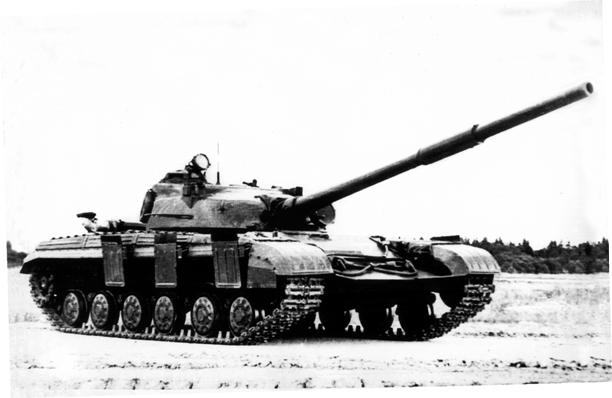
Tank Object 434, Prototype № 9
Ministry of Defense Perspective
The
main materials are drawn from the report “On the Operational Use and Testing of
the T-64 and T-64A Tanks” by the representative of the Chief of Tank Troops,
Comrade Cherednikov, presented to the commission of
Comrade Yakubovsky. Beginning of quote:
Ministry
of Defense Perspective – Detailed Data
I. Tanks produced 1967–1969
1.
From 1967–1969, 180 tanks were
modernized (120 at the Malyshev Plant and 60 at
BTRZ-115) at a total cost of 17.9 million rubles.
2.
During field operations of 990 T-64
tanks between 1966 and 1970, there were over 2,400 failures and malfunctions of
running gear, powertrain, weapons stabilizer, and
other units and systems, including 1,800 failures within the warranty period (
·
1,384
engines of series I–IV failed, including:
o
Over
300 engine hours (EH) = 246
o
200–300
EH = 375
o
100–200
EH = 444
o
Less
than 100 EH = 319
·
From
1966–1973, the plant received 1,069 claims.
·
The
MOD proposed that all T-64 tanks produced before 1968 be upgraded to T-64A
standards (excluding weapons) during major overhaul. There were 1,230 such
tanks, requiring 130 million rubles.
·
Due
to significant differences in engines of series I–IV, it was economically
impractical to repair them. Therefore, all engines produced before September
1969 were decommissioned. Total: 2,100 engines, valued
at 5.5 million rubles.
II. T-64A Tanks
1.
Current
tanks in service had the following mileage:
·
0–1,500
km = 53%
·
0–3,000
km = 84%
2.
Results
of some tests:
a) Extended field
trials of 65 tanks in 1969:
·
3
tanks in BVO, PrikVO, SibVO
·
2
tanks in TurkVO
·
50
tanks in five military districts (10 tanks each)
·
10
tanks in KVO (1970)
·
None
of these tanks achieved reliable operation within the warranty period.
·
Failures:
41 engines (31 within 300 EH), 11 transmissions, 1,089 running gear components,
46 malfunctions of stabilizer, autoloader, and weapons. Low hull survivability
observed (cracks).
b) Trials of 6
tanks in Chuguev, Borisov,
and Tedzhen, July–August 1970 (6,500–7,000 km):
·
2
engines failed before 300 EH.
·
4
engines were found unsuitable for further use upon disassembly.
·
2
transmissions and several running gear components failed (total 68 failures).
c) October
1970–January 1971 trials of 10 tanks in PrikVO (≤300
EH,
·
178
malfunctions, including:
o
Engines = 2
o
Transmissions = 2
o
Running gear units = 173
d) June–November 1971 trials of 15
tanks:
·
7
engines, 18 transmissions, 20 running gear units failed.
·
No
detailed report was provided to the commission.
e) Intensive
operation of 171 tanks in 1971:
·
502
failures, including:
o
Engines = 15 (58 required repair)
o
Transmissions = 15
o
Road wheels and drive sprockets = 13
o
Rollers and idlers = 20
o
Track assemblies = 15
·
Engine
system failures = 166
f) 30th Tank
Regiment march, Oct 1972,
·
11
tanks did not reach the assembly area (8 water ingress in engine, 3 running gear damage).
·
Total
forced stops: 64 (34 stuck, 30 component failures).
·
On
94 tanks, 314 malfunctions, including:
o
Transmissions = 3
o
Tracks = 22
o
Road wheels = 1
o
Rollers/idlers = 3
o
Shock absorbers = 20
g) Trials of 7
tanks, June–August 1972 (
·
141
failures, 54 malfunctions, including:
o
Transmissions = 2
o
Engines = 4
o
Fuel tanks, running gear = 19
·
One
engine showed cavitation damage (through-cylinder
hole).
h) Operational use
in 1972:
·
604
failures, including 495 within warranty, 109 after warranty.
·
Tank
systems failures:
o
Engine & systems: within
warranty = 45, post-warranty = 28
o
Transmission & systems: within
warranty = 43, post-warranty = 9 (pure transmission failures = 26, all within
warranty)
o
Running gear: within warranty = 92,
post-warranty = 35
i) Warranty trials – 3 T-64A tanks:
·
Tank
1: failures due to hydraulic stabilizer hose rupture, road wheel bearing, and
hydraulic shock absorber.
·
Tank
2: hydraulic shock absorber failure, premature detonation of three shells.
Overall
(1969–1973):
Despite 57% of tanks not
reaching
j) Engines of
Series V–VII
Current engine hours distribution:
·
≤50
EH = 694
·
≤100
EH = 376
·
≤200
EH = 501
·
≤300
EH = 208
·
300
EH = 268
·
Of
1,541 engines installed, 366 failed:
o
≤100 EH = 36.6%
o
≤200 EH = 28.6%
o
≤300 EH = 13.3%
·
Power
increase of +50 hp had no positive effect.
·
Engines
could not operate on other fuel types.
k) Modernization of
tanks produced 1969–1971
·
Due
to unsatisfactory operation of 1969–1971 T-64A tanks, the MOD decided to
modernize 610 tanks of the combat group: replacing engines, support rollers,
radiators, preheaters, and conducting other measures.
·
In
1972, 350 tanks were upgraded at a cost of 8 million rubles.
Conclusion: T-64A required a series of major
modifications. Key deficiencies included:
·
Short
operational range
·
Small
ammunition capacity and inconvenient use, especially if autoloader fails
·
Crew
operation inconvenience
·
Low
engine specific power
·
Susceptibility
to fire
End of MOD perspective quote.
Malyshev Plant Perspective
T-64A – Mid-1971 Production, Welded
According to a letter from
the Malyshev Plant Director O. Soich and Acting Chief Designer N. Shomin:
The Malyshev Plant, under the direction of the USSR Ministry of Defense (MOD) and the
Ministry of Defense Industry (MODI), developed the T-64A based on the T-64 to
further improve combat performance. The T-64A featured:
·
More
powerful armament (
·
Improved
fire control and weapons stabilizer system
The
State Commission, in accordance with the directive of the General Staff of the
USSR Armed Forces dated May 17, 1967, conducted trials of these tanks. Its
report (Inventory № 2599, 10 July 1968) recommended the T-64A for serial
production and adoption into service, confirming the following tactical and
technical characteristics (TTC).
By
the decree of the CPSU Central Committee and USSR Council of Ministers dated
May 20, 1968, № 360-137, the T-64A was placed into serial production at the Malyshev Plant, and its TTC was officially approved.
Serial
production began in January 1969. The produced tanks fully complied with the
approved TTC.
During
serial production, the plant carried out extensive design and technological
improvements to various components and mechanisms based on results from field
trials and refinement of manufacturing technology.
To
verify reliability and combat performance of the T-64A, 15 tanks were tested in
1971 across the following military districts: BVO, KKVO, PrikVO,
SKVO, and TurkVO. A total of 183 design and
technological measures were implemented on these tanks.
The
trials covered distances of 1,000–1,100 km and confirmed high tactical,
firepower, and maneuvering qualities of the T-64A, as well as its increased
reliability. The majority of measures were effective and recommended for
implementation in serial production.
The
Commission concluded: “The T-64A tanks and 5TD engines passed the trials.”
However, all identified deficiencies were scheduled for correction during
serial production, in coordination with the MOD and MODI.
After
reviewing trial results, Minister of Defense A. A. Grechko,
acknowledging their positive outcomes, requested Minister of Defense Industry
S. A. Zverev to increase production of the T-64A and
implement corrective measures starting January 1, 1972.
In
response, the plant developed a comprehensive program and, together with
Military Unit №85 MOD, compiled a “List of Measures to Eliminate Deficiencies
Identified During Trials of 15 Test Tanks.” A total of
84 measures were agreed upon and implemented within the required timeframe.
Verification of Reliability Measures
To verify enhancements in
component durability based on the 1971 trials and to reduce maintenance
requirements, in accordance with the directive of the Commander of the Ground
Forces dated June 26, 1972, seven T-64A tanks underwent testing in KKVO from
July to October 1972.
·
Tests
covered a total distance of
·
All
major components, except experimental engines, demonstrated compliance with
expected service life.
Additionally, accelerated
operation and military exercises of large numbers of tanks were conducted in
units between 1970–1972:
Testing and trials of T-64A tanks with 5TDF V-series engines in various climatic conditions. Note: Minor discrepancies exist in
the number of tanks reported in various slides and texts.
Summary
of Reliability Enhancements
Between
1967–1975, the
T-64A underwent extensive, comprehensive testing under diverse road and climate
conditions across BVO, KKVO, PrikVO, ZabVO, TurkVO, LVO, and ZakVO.
·
A
total of 1,246 tanks participated in factory, joint, and field exercises,
accumulating over 1.6 million km and 80,000 engine hours.
·
Tests
were conducted year-round.
·
The
plant, in cooperation with industry institutes, MOD specialists, unit
commanders, and technicians, implemented extensive design, mechanism, and
equipment improvements to increase reliability and service life.
Between
1970–1973:
·
242
major structural improvements implemented
·
Approximately
1,000 technological upgrades applied
·
Improvements
affected nearly all major tank systems and allowed:
o
Increased durability of running gear
(road wheels, idlers, tracks, drive sprockets, support rollers, hydraulic shock
absorbers)
o
Enhanced hull and turret protection
(fully stamped side plates, coaxial sight tube)
o
Reliable operation of the autoloader
(MZ)
o
Greatly improved reliability of powertrain and engine systems (two-stage air cleaner,
improved cooling system, oil preheating, improved hose fittings, reinforced
fuel tanks)
o
Increased durability of side transmissions
(reinforced pump drive, dual-mass system, increased disk quantity, upgraded
disk materials)
o
Effective fire suppression system,
improved communications
Number of failures per tank per
Results:
·
Reliability
improved from the 1969–1970 trials of 50 tanks to the July–October 1972 trials
of 7 resource tanks:
o
Within warranty: 9×
improvement
o
Over full service life: 7×
improvement
Warranty Test
Results:
·
Tank
№1 (Feb–Mar 1972, Unit 68054) – 14 defects identified
·
Tank
№2 (June–July 1972, TurkVO) – 4 defects
·
Tank
№3 (Dec 1972–Jan 1973, ZabVO) – 1 defect
·
Based
on operational experience, the plant extended the warranty to
Combat
Performance Upgrades – T-64AM
Alongside reliability
improvements, work was conducted to enhance combat capabilities, resulting in
the T-64AM variant.
Measures included:
·
Upgraded
armament, fire control, and stabilization systems
·
Lessons
learned from field trials and accelerated exercises implemented
·
Enhanced
mobility, engine reliability, and armor survivability
Minister of Defense
Order №021ss (Jan 22, 1973):
·
The
T-64A was officially adopted into Soviet Army service four years after serial
production began
·
Enhanced
features approved included:
o
Anti-aircraft machine gun
o
Integrated self-entrenching dozer
o
Mine plow capability
o
Command variant T-64AK based on the
line tank
Production
and Implementation Challenges
·
For
over four years after the CPSU and Council of Ministers decree, tanks were
produced according to drawings not approved by the Interdepartmental Commission
(MVK).
·
Serial
production according to MVK-approved documentation was intended from July 1,
1971, under Contract T-984 for 1971 deliveries.
·
MVK
review by the customer was delayed until March 1973.
·
Lack
of approved measures and deadlines led to isolated technical decisions with
arbitrary completion timelines.
Regarding MOD Inspection
Unit №85’s comments on delayed implementation:
·
Between
1969–June 1975, over 240 major structural modifications were introduced to
further improve quality and reliability
·
Several
improvements remained pending due to technical complexity, delaying implementation
in serial production
·
Some
points (№ 2, 5, 8, 10, 11) were re-raised by MOD Unit №85, despite prior
resolution in August 1972 with Tank Troops Chief A. Kh. Babadzhanian
·
Certain
measures (detachable tray and cab with extended transition zones, 3EZ-11
system, removable radiator manifolds) were not yet in serial production due to
MVK decision delays
·
Inspection
Unit №85 repeatedly demanded duplicative checks, causing additional delays
Main technical characteristics of the T-64A and
T-64AK tanks at the time of adoption into service
In
the intensive and demanding work of the design bureau and the plant on refining
and perfecting the tank, preparing production, and implementing thoroughly
tested design measures into serial production, additional difficulties arose.
These were related to the fact that for more than four years after the CPSU
Central Committee and USSR Council of Ministers decree on serial production,
tanks were manufactured according to design and technical documentation that
had not been approved by the Interdepartmental Commission (MVK).
Production
of T-64A tanks according to MVK-approved drawings and technical documentation
was planned to start on July 1, 1971, under Contract T-984 for delivery of
T-64A tanks in 1971. However, the MVK approval process by the customer was
delayed and was only conducted in March 1973.
The
absence of reviewed and approved MVK measures, as well as the lack of deadlines
for their implementation across all tank components, led to the emergence of
various isolated decisions with technically unjustified timelines for
completing these measures.
Regarding
the remarks of Inspection Unit №85 of the Ministry of Defense (MOD) on the
untimely implementation of joint decisions, the plant cannot agree with the
accusation of reluctance or slowness in tank refinement, because:
·
From
1969 to June 1975, more than 240 major structural modifications were
implemented, aimed at further improving the tank, enhancing its quality and
reliability;
·
Indeed,
alongside the implementation of a large number of improvement measures during
serial production, there remained a number of issues regarding further
enhancement of tactical and technical characteristics and elimination of
deficiencies. Due to technical difficulties, these issues have not yet been
resolved, and the implementation timelines for corresponding measures in serial
production were postponed.
These
issues are reflected in the MVK decisions and are included in the work plan of
the design bureau, the plant, and other organizations.
·
Some
issues (№2, 5, 8, 10, and 11) are again being raised by MOD Inspection Unit
№85, despite the fact that these issues had been resolved by a decision agreed
on August 17, 1972, with the Chief of Tank Troops, Comrade A. Kh. Babadzhanian, and no remarks
were received from the troops regarding them;
·
A
number of measures (detachable tray and cab with expanded transition zones,
3EZ-11 system, radiators with removable manifolds, etc.) have still not been
introduced into serial production solely due to MOD Inspection Unit №85 not
taking independent decisions.
At
the same time, while executing the agreed scope of inspections, MOD Inspection
Unit №85 continues to issue new, progressively increasing requirements,
ultimately demanding duplication of inspections by other organizations and
leaving decision-making to the customer’s management;
·
There
have been prolonged delays in coordinating design orders with MOD Inspection
Unit №85 for a number of measures, e.g., the introduction of a turret with
ceramic filler, 3EZ11-2 system. Due to MOD Inspection Unit №85’s refusal, the
design orders were only approved at the MVK level.
Quality claims accepted by Malyshev plant. 1970-1973.
End of Malyshev Plant perspective.
Summary of Part 1
Between 1969 and 1973, the
T-64A tank underwent extensive and comprehensive testing, including field
operations, regimental and divisional exercises, resource trials, and serial
production use. In total, 1,246 tanks were involved, accumulating over 1.6
million kilometers and 80,000 engine hours. During this period, failures
occurred primarily in engines, transmissions, running gear, weapons, electrical
systems, and communications equipment. Early series engines (V–VII) exhibited
significant early failures, with 36.6 percent failing within the first 100
engine hours, 28.6 percent between 101 and 200 hours, and 13.3 percent between
201 and 300 hours.
The T-64A’s operational
range on unpaved roads was between 280 and
Through systematic efforts
by the Malyshev Plant and the design bureau, measures
such as additional fuel tanks, strengthened running gear, improved
transmission, enhanced engine maintenance systems, fire suppression upgrades,
and improved communications were implemented. These actions gradually brought
the T-64A to an acceptable level of operational reliability by the time it was
officially adopted into service in 1973. Nevertheless, the remaining structural
and operational limitations justified the parallel development of the T-72,
which complemented the T-64A and ensured further strengthening of the Soviet
Army’s armored capabilities.
In summary, by 1973, the
T-64A had achieved a satisfactory level of reliability through intensive
testing and modernization, but its limitations prevented it from becoming the
sole main battle tank, shaping the Soviet approach to parallel tank
development.
Yakubovsky Letter – A Turning Point in Soviet
Tank Development
Part 2
The
letter dated 17 July 1973, № 202/009, from the head of the 7th
Main Directorate, M. I. Maresev, addressed to A. A. Morozov and O. V. Soich, titled “On
the Remarks of the Commission on the T-64A”, which presented the
conclusions of the commission of the Commander-in-Chief of the Ground Forces,
Marshal of the Soviet Union I. I. Yakubovsky,
represents a pivotal historical moment in Soviet tank building. These events
determined the future development path involving the parallel development of
the T-64A, T-72, and later the addition of the T-80.
Quote:
“The
work conducted by the Malyshev Plant to refine the
tank during serial production and modernization did not fully eliminate the
remarks identified during trials, field operations, and exercises, nor did it
address the structural deficiencies of the T-64A, which include:
1.
Insufficient operational range,
which does not allow daily marches of 300–350 km without refueling;
2.
Placement of the ammunition load
allows only 30 rounds out of 37 to be fired in combat without stopping the
tank;
3.
Difficult access for the driver to
the fighting compartment;
4.
Insufficient cross-country mobility
on soft terrain;
5.
Shallow ford-crossing capability;
6.
Possibility of fires in the powertrain compartment;
7.
Difficulty replacing track links and
towing the tank without tracks.
Required
reliability for a number of units and assemblies has not yet been achieved.
During
exercises of the 23rd Tank Division, equipped with tanks produced in 1972–1973,
with mileage of 900–1,200 km, failures and malfunctions occurred in the engine
and its systems, powertrain, running gear, and
instruments.
To
date, work to increase engine power and ensure operation on various fuel types
has not been completed.
Based
on the above, organizing serial production of the T-64A at other plants in the
industry, apart from the Malyshev Plant, is
impractical.
I
ask you to take measures to ensure the prompt elimination of the deficiencies
of the T-64A, paying particular attention to the deficiencies listed in the
commission’s conclusions of Comrade I. I. Yakubovsky.”
End of quote.
Note: The seven points above, highlighting the structural deficiencies of the T-64A and
serving as justification for adopting a second type of tank with similar
characteristics, deserve special attention. Regarding these points, memoranda
were sent to the Ministry of Defense Industry (MODI) by Chief Designer A. A. Morozov. In addition, comparative trials were conducted
that confirmed the obvious inaccuracy of Yakubovsky’s statements.
Below
is the content of A. A. Morozov’s memorandum on work
performed to eliminate the deficiencies of the T-64A identified by Yakubovsky’s commission. Author’s notes are in italics.
1. Insufficient operational range, not allowing daily
marches of 300–350 km without refueling
·
The
operational range of T-64A tanks on unpaved roads was 280–350 km
without additional fuel drums and 400–440 km with additional
drums. These values were taken from the 1972 test report of seven
tanks.
·
172M –
Operational range on medium-cross-country terrain at an average speed of
·
According
to trials of six tanks in 1971 for Object 219, the operational
range, depending on road conditions, averaged
·
However,
experience shows that by maintaining higher speeds, the number of stops during
marches can be reduced, allowing a regiment to refuel every three hours.
·
To
increase the T-64A operational range, from 1 April 1975,
additional fuel tanks were installed on the right side of the hull
above the tracks, increasing the carried fuel by
Note: This
value is
·
Based
on publication data [1], claims about insufficient operational range of the
T-64A, especially in comparison with the T-80, appear completely
unfounded
Entry in A. A. Morozov's diary dated November
1, 1973: T-64A paved the way for all
design bureaus. I officially declare that if I am not given the opportunity to
work on modernization, I request to be dismissed from the position of head of
the design bureau.
2.
Ammunition Placement Allows Firing 30 Rounds in Combat Without Stopping the Tank
The T-64A carries a total
ammunition load of 37 rounds, which are stored as follows:
·
28 rounds (76%) are located in the autoloader mechanism and can be used in combat
without any limitations;
·
2 rounds (5.4%) are stored in the turret stowage and can be fired without stopping the
tank, but only when the gun is placed on the hydro-stop;
·
7 rounds (18.9%) are stored in a rack within the driver’s compartment. These rounds can
be transferred to the autoloader mechanism without the crew leaving the tank,
but only after a brief stop of the vehicle, since the driver participates in
this operation.
It is important to note
conclusions based on tests of 15 Object 172M tanks in 1972.
Among the identified shortcomings, it was noted that 60% of the rounds
(22 rounds) were in the autoloader, which could reduce combat
effectiveness. Reloading the autoloader from the non-mechanized stowage
requires ceasing fire and turning the turret approximately 45° from the 30–00
firing direction during the reload. When firing manually from the
non-mechanized stowage, the reload rate is 1.2–2 minutes per round,
including turret rotation and temporary loss of the target.
Author’s note: It is evident that the same
shortcomings were sometimes emphasized and sometimes overlooked. For example,
the 1972 test report of Object 219, equipped with an
autoloader similar to the T-64A, states: “With 75.6% of the tank’s ammunition
in the mechanized stowage, the effectiveness of gunfire is increased, while the
9 rounds in the non-mechanized stowage can be used during firing from stops at
a rate of 0.5–0.8 rounds per minute.”
As an illustration of this situation, a diary entry by A. A. Morozov made in 1973 is worth citing: They equated a tank
with a market (whatever the wife wants, they will buy). They believe everyone
and everything, but not us.
3.
Difficult Access for the Driver to the Fighting Compartment
With the introduction of a 7-column
autoloader instead of the 10-column design in November 1972, the
probability of needing to rotate the autoloader manually was reduced by 1.4
times, which improved the conditions for the driver to access the
fighting compartment.
Note: It is also worth noting that the
overall layout of the fighting compartment, with an isolated fighting cabin,
was designed so that all major units and assemblies were accessible from the
driver’s or engine compartment, rather than from the fighting compartment
itself. This design feature was already presented in the technical project of Object
432 and was acceptable to both the customer and the leading industry
institute, VNII Transmash [2].
Comparative data on autoloaders of T-64A and
T-72 (172M)
1 – number of
automated rounds,
2 – rate of fire,
3 – rate of fire if
loaded in manual mode,
4 – reliability in
extreme dust conditions
5 – required operations
6 – case extraction
7 - Ensuring the mechanism works when the tank
bottom is bent (mm)
8 – possibility of use
with guided missile “Kobra”
10 - labor costs for manufacturing
man-hours
From the
Memoirs of A. I. Mazurenko, a Developer of the T-64A
For us, the developers of
the autoloader mechanism, it resulted in a new “fundamental” deficiency, called
the “lack of crew passages.” At the time this new problem arose, the refinement
of the autoloader based on remarks from the large series of field trials was
practically complete. As the person responsible for this mechanism, I was
firmly convinced that no one could devise anything better within the layout
constraints of our tank.
When the first information
appeared about the new autoloader of the Nizhny Tagil Uralvagonzavod, I did not take it seriously, because
its shortcomings, compared to our mechanism, were obvious. First of all, by
placing the mechanized ammunition rack under the floor of the crew compartment,
they lost six rounds, reducing the automated ammunition load by 23%, which from
a military perspective should have been completely unacceptable. The new
loading scheme became a two-stroke process (first the projectile
was loaded, then the charge in a second movement), which undoubtedly reduced
the rate of fire and eliminated the possibility of manual backup. The spent
tray could not be placed in the tray by design, so it was ejected outside
through a special hatch at the rear of the turret, naturally compromising the
sealing of the fighting compartment and preventing firing in radiologically contaminated areas, which also should have
been unacceptable for the military.
However, it turned out that
despite this “bundle” of deficiencies, the Tagil tank
had a clear “advantage” compared to the T-64A – the ability for crew members to
move between the fighting compartment and the driver’s compartment in emergency
situations. The military, forgetting about the deficiencies, latched onto this
contrived “advantage” with a death grip. We had to urgently save our tank and
find a design solution for the “passage.” Of course, we found a solution,
slightly complicating the tray design and making it detachable,
so that the vertical part of the tray could be removed if necessary to clear
the crew’s evacuation path.
4.
Insufficient Cross-Country Mobility of the T-64A on Soft Ground
The cross-country mobility
of tanks on soft terrain is determined by the average specific ground
pressure of the tracks. The specific ground pressure of the T-64A is 0.83
kg/cm², which is comparable to the specific ground pressure of
well-known domestic and foreign medium tanks.
Specific ground
pressure on soil:
·
Object 172M – 0.83 kg/cm²
·
T-34 –
0.83 kg/cm²
·
T-54 –
0.90 kg/cm²
·
Leopard – 0.84–0.87 kg/cm²
·
Chieftain – 0.84–0.97 kg/cm²
·
M-60 –
0.77 kg/cm²
The claim of reduced
cross-country mobility of the T-64A on soft ground was not supported by any
comparative trials with other medium tanks (T-62, 172M, etc.). Such comparative
tests were conducted by VNIITM in
April–May 1974.
The
test results of the T-64A, T-72, Object 219, and T-62 tanks completely refuted
this claim. According to the trials, the T-64A demonstrated the best mobility
in swamps with depths of 85–120 cm and 120–150 cm, compared to the T-62, T-72,
and Object 219.
During
repeated crossings of a swamp 85–120 cm deep, the T-64A did not become stuck.
Object 219 experienced one immobilization, the T-72 had two, and the T-62 had
five. During a single crossing of a swamp 120–150 cm deep, the T-64A did not
become stuck, while the T-62, T-72, and Object 219 did.
Note:
A major strength of the T-64A running gear and its modifications is excellent cross-country mobility. The
shape of the track shoe’s contact surface and the holes in it not only reduce
weight (decreasing idle rolling losses), improve track self-cleaning, but also
enhance traction: internal forces between soil particles beneath and above the
track are effectively utilized. This provides an additional 15–25% of tractive effort, while the remaining 50–65% is realized
through the track’s soil-engaging cleats (spurs).
The T-64A maintains mobility on
swampy terrain, and its running gear shows high tolerance to clogging, beyond
which mobility is lost.
Its tracks ensure adequate self-cleaning from soil [3] and reduce the
rolling resistance of the road wheels along the track path.
Design studies to improve T-64A
cross-country mobility showed that further improvement could only be achieved
by significantly reducing the tank’s specific ground pressure, which is
impossible without a major redesign of the running gear (widening or
lengthening the tracks) and, consequently, a substantial reconfiguration of the
entire tank. It is worth noting that the customer required the T-64 designers
to achieve a ground pressure of 0.50
kg/cm², and such work was implemented using removable track
wideners [4].
5. Shallow
Ford-Crossing Capability
Starting April 1, 1975, the T-64A was equipped
with permanently installed valves, a quick-install exhaust pipe, a cover
closing the air intake to the AK-150
compressor controlled by the driver, and peripheral louvers above the air
cleaner also controlled by the driver. These modifications increased the
maximum ford-crossing depth from
6. Risk of Fires in the Engine-Transmission
Compartment
Three
cases of fire in the engine-transmission compartment (ETC) occurred during
exercises in 1973 (Ovruch) and were linked to violations of operational rules (fueling
into the ETC instead of the tank through the water ejection hole from the rear
pump, a barrel of another tank penetrating a drum, fuel entering the ETC during
drum refueling). None of these incidents were publicized. The probability of
fuel entering the ETC from the ejector box during drum penetration was reduced
with the introduction of valves in the
ejector box as part of the “Ford” system (from September 1974).
Fire
safety in the ETC was ensured from January 1972 through measures to improve the
reliability of connections in the fuel, exhaust, and oil systems:
·
Improved
sealing of hydraulic system hoses for the transmission with high-temperature
sleeves.
·
Additional
fastening of the oil supply line to the injector distributor.
·
More
flexible compensators at the junctions of the curved pipe with the engine
collector and turbine inlet.
·
Improved
attachment of insulation for the curved pipe and engine exhaust collector.
·
Design
and technological improvements for high-pressure pipes and the fuel supply line
from the filter to the pumps.
·
Protective
covering of basalt fiber for the exhaust duct.
7.
Difficulty of Replacing Tracks and Towing the Tank Without Tracks
Replacing tracks in soft terrain (deep mud, swamp, sandy soil), as well
as towing the tank without tracks in these conditions, is labor-intensive for
all tracked vehicles, and the T-64A is no exception. Installing tracks on soft
ground, according to VNIITM trials in April–May 1974 on T-64A, T-72, and Object
219, was similar for all tanks.
The towing effort for the T-64A without tracks is higher than for other tanks.
The narrower road wheels of the T-64A, compared to the wider rubberized
wheels of other medium tanks, somewhat complicates towing operations; however,
the feasibility of these operations has been repeatedly confirmed both in unit
service and by special tests conducted by enterprise p/o A-3530.
Equalizing the dimensions of the T-64A road wheels to reduce ground
pressure to the level of tanks with wider, rubberized wheels is not feasible, as it would increase wheel
weight and overall tank weight by approximately two tons, as shown by
experience with the 172M and Object 219.
Note: Many years later, in 1990, during
work on completely different vehicles, tests were conducted to check the
possibility of evacuating Objects 434 and 478B (running gear similar to Object
219) without tracks and
installing tracks on low-load-bearing soils. Findings from the report:
Evacuation of a vehicle stuck in loose sand without tracks
using another identical vehicle was impossible due to the latter’s
slippage. Under these conditions, evacuating Object 434 required 20–23 tons of
force, Object 478B – 15.5–17.5 tons.
Installing tracks on loose sand for Objects 434 and 478B using Object
454 with a winch was possible. For Object 478B, approximately 24% less effort
was required to lay the track. The preparation and installation time for each
vehicle in these conditions was about 1.5 hours.
Without towing vehicles, track installation after removal on loose sand
is done by undercutting all road wheels
and dragging the track under them.
Another issue was deformation of
the autoloader conveyor during collisions. In T-64A units, there were
cases where the M3 conveyor, loaded with rounds, deformed during emergency
collisions of tanks at speeds of
To prevent M3 conveyor deformation even during
tank collisions, from October
The 5TDF Engine and Its Reliability: A Lost
|


Location/Period
|
Polotsk
|
Novomoskovsk
|
Cherkassy-Ovruch
|
March 1972
|
February 1972
|
October 1972 – May 1973
|
|
Series/ Production Year
|
III-IV
1966-1969
|
V
1969
|
V
1972-1973
|
Number of engines on the march
|
247
|
305
|
417
|
March distance, km
|
1100
|
1300
|
1000-1500
|
Number of engines that failed on
the march due to:
|
22
|
6
|
2
|
Piston group failure
|
11
|
-
|
1 (assumed)
|
Cylinder block seal failure (water in oil)
|
4
|
-
|
-
|
Supercharger failure
|
3
|
2
|
-
|
Air start valve burnout
|
-
|
1
|
-
|
Control ratchet coupling failure
|
2
|
1
|
-
|
Coolant leak from water pump inspection hole
(engine removed)
|
-
|
-
|
1 (removed unjustifiably)
|
Other single instances
|
2
|
2
|
-
|
Number of engines repaired on the
march
|
14
|
24
|
15
|
By fault type:
|
|
|
|
ADU-2S unit failure
|
2
|
12
|
-
|
Fuel injection pump plunger pair sticking
|
8
|
2
|
5
|
Air start valve burnout
|
-
|
6
|
-
|
High-pressure fuel line/tube fitting failure
|
4
|
1
|
3
|
Coolant leak from water pump inspection hole
|
-
|
3
|
1
|
Starter-generator failure
|
-
|
-
|
2
|
Injector outer casing failure
|
-
|
-
|
2
|
Coolant drain pipe leak
|
-
|
-
|
2
|
Total failures on the march
|
36
|
30
|
17
|
Failure rate per engine per
|
0.13
|
0.076
|
0.037
|
During these exercises, the
5th-series engines demonstrated sufficient reliability and ensured the accomplishment
of the tasks assigned by the command.
An analysis of the exercise results
shows that for engines manufactured up to 1969 (prior to the 5th series) there
were 0.13 failures per engine per

The
increase of 5TDF reliability (1968-1972).
In
March 1973, the interdepartmental commission (MVK) approved the design and
technical documentation for the engine for series production with the
designation “B,” which indicates production stability and the possibility of
transferring the design and technological documentation for engine manufacture
to other plants. The deadlines for implementing the measures approved by the
MVK are being strictly observed by the plant.
At
present, the plant continues work aimed at further increasing the engine’s reliability
and service life to 700 hours. Three engines have completed 700 hours on the
test stand, two engines are undergoing trials installed in a vehicle, and
additional measures to ensure a 700-hour service life are being implemented.

Work on the 5TD-3 engine
with a rated power of 750 hp has essentially been completed. Design and testing
work is under way on a 900 hp engine: two 900 hp engines have accumulated
450–600 hours on the test stand. One engine is being tested in a tank and has
already accumulated 170 operating hours. Multifuel versions of the 5TDF and 5TD-3 engines have been developed. Beginning in July,
production of the 5TDF engine in a multifuel version
will commence (diesel fuel, gasoline, kerosene, and their mixtures).
It
should be noted that during work under contractual topics and in the execution
of joint decisions, schedule slippages did occur. Some of these delays were mainly
due to the need to resolve technical difficulties encountered.
A
significant portion of the schedule delays is explained by the fact that
deadlines were set by the customer without regard to the feasibility of
resolving certain technical issues within those time frames. In a number of
cases, the impracticality of the deadlines was obvious, yet they were accepted
by the plant out of necessity in order to avoid production stoppages; an
example is the design bureau work on increasing engine service life to 500
hours.
It must also be noted that the customer itself did not always
demonstrate sufficient discipline or interest with respect to meeting
deadlines.
During the period 1969–1972, the design bureau and the plant implemented
more than 850 design measures into production aimed at increasing engine
reliability and service life, as well as improving manufacturability, and these
measures naturally produced positive results.
Work of the design bureau on
eliminating engine shortcomings.
Report on the work carried out by the plant to refine the 5TDF engine, uprate it to 750 hp (5TD-3), and develop a multifuel version. Submitted on 22 June
1973 to Plant Director O. V. Soich by Chief Designer
of the KhKBD L. L. Golints.
Excerpt:
In the course of engine refinement, joint decisions provided for the
elimination of a number of engine shortcomings. The status of work on the main
shortcomings is outlined below.
1.
Failure
of the SG-102 starter-generator drive.
Failures of the SG-10 are of a sporadic nature and amount (relative to the
number of engines in service) to: 1970 – 0.16%, 1971 – 0.050%, 1972 – 0.095%,
1973 – 0.08%. The cause of SG-10 drive failures is violation of operating
instructions, as confirmed by failures of the ratchet clutches recorded by a
commission during joint tests under close observation. This has also been
confirmed by specially conducted studies.
The design bureau has developed and tested four drive design variants.
Tests showed that these variants are more reliable than the production version
and could reduce the number of failures by half, but they would not provide a
sufficient margin of reliability for all cases of instruction violations in the
troops. At the same time, implementation of these variants would require major
production reconfiguration. Therefore, the design bureau and the plant are
currently conducting extensive work to develop a more reliable variant in order
to resolve the issue within the timeframe established by the MVK—the fourth
quarter of 1973.
2.
Ensuring
reliable operation of the piston group.
In 1972, all 10 engines completed the specified warranty period. Reliable
operation of the piston group is also confirmed by operating experience. The
plant has no claims regarding the piston group for engines produced in
1972–1973.
Reliable operation of the piston group is specifically noted in the test
report for 15 control tanks. Paragraph 5 of the conclusions states: “The piston
group operated normally during the tests. Oil consumption became stable.”
Ignoring these facts, and at the insistence of customer representatives,
the MVK did not approve the piston group for a service life of 40 stages,
citing the fact that during warranty bench tests in 1972, ring failures
occurred on the first two engines (at 310 and 340 hours), and did not take into
account that, as a result of measures adopted in serial production, the
operability of the piston group was confirmed by subsequent warranty tests
totaling 600 hours.
As evidence of unreliable piston group operation, customer
representatives Ladonnikov and Sarychev cited engines Nos. 7168, 7040, and 7026, although:
– Engine M02-7168 operated for 520 hours on the test stand during
warranty tests (120 hours beyond warranty);
– Engine P04-7040 experienced piston group failure while operating in an overturned
tanker;
– Engine M04-7026 was not inspected (metal filings were found at the MCF when
the tank was returned to Plant No. 115).
The inconsistency of these examples indicates a superficial approach by
military acceptance management to the analysis and evaluation of engine
performance.
3.
Reliability
of the supercharger and its drive.
Analysis showed that the supercharger design reliably обеспечивает a service life of 700 hours in operation.
– On engines produced in 1972–1973 under troop operating conditions,
there were three cases of supercharger impeller failure. A warranty claim was
filed for only one engine—P08ET7199 (53 operating hours). The cause is under
investigation.
– On engine P09ET7320, impeller failure occurred after 2 hours of operation.
The cause was the ingress of a foreign washer into the supercharger (act signed
by Sarychev, Military Acceptance 4766).
– On engine P01ET7063, impeller failure occurred after 233 hours of operation.
No warranty claim was filed because, when replacing the idler assembly, unit
personnel did not install the linkage blocking sensor that protects the
impeller from overspeed.
4.
Increasing
reliability of the water pump.
A new-design water pump (combined with the gearbox) has been installed on the
engine since February 1972. There were no warranty claims in 1972 or the first
half of 1973.
Measures for further increasing water pump reliability have been developed, tested, and will be implemented in
serial production within the MVK-established timeframe—the third quarter of 1973.
5.
Increasing
reliability of sealing of injector bodies and starting valves.
During 1972 and the first half of 1973, no warranty claims were received.
To further improve sealing reliability, in accordance with an MVK
decision, radial sealing with rings made of IRP-1287 rubber will be introduced
from 1 July 1973.
6.
Increasing
reliability of sealing between the fuel pump housing and the block.
Throughout engine operation, there have been no warranty claims. On some
engines during accelerated tests at high operating hours, slight sweating at
the joint was observed. The customer representative’s claim that this defect
occurs during all types of tests is subjective and unfounded.
To further improve sealing reliability with increased service life, a
new IRP-1287 rubber seal will be introduced from 1 July in accordance with the
MVK decision.
7.
Ensuring
stability of engine parameters.
As a result of a комплекс of work carried out in
1969–1971, power losses during warranty-period engine tests were significantly
reduced. During warranty tests in 1972, only two engines exhibited power losses
exceeding permissible limits (above 4%).
In 1973, the MVK established allowable power losses of 5% during bench
tests due to the increase of the warranty service life to 400 hours.
Ensuring
reliable operation of the ADU-2S control unit.
Since January 1972, the ADU-2S has been installed at the rear of the vehicle.
Since that time, warranty claims have ceased.
To further improve ADU-2S performance, a new separator design will be
introduced from July 1973 by MVK decision.
Ensuring
reliability of sealing between exhaust manifolds and inlets.
There have been no warranty claims related to this
sealing assembly during operation. According to the instructions, leakage at
the joint is eliminated by tightening.
To further improve sealing reliability, a new design of gas-sealing ring
will be introduced into serial production from 1 July
10.
Increasing
reliability of fuel filters.
Since 1 January
To further improve fuel filtration and increase the reliability and
service life of the fuel system, a cardboard filter element has been developed
and has passed bench and field tests. The new cardboard filter has been
approved by MVK decision and will be introduced into serial production from
October 1973.
11.
Regarding
seizure of fuel pump plunger pairs.
Seizure of fuel pumps occurred on engines Nos. P08-7151 and P05-7182 at
operating times of 240–296 hours respectively. The nature of the defect was
circumferential seizure of the plunger against the sleeve. The seizure is
evidently related to the presence of water in the fuel.
During exercises, there were six
cases of plunger pair seizure. There are grounds to assume that the seizures
were associated with the use of low-quality fuel, since on two vehicles the
filters were found to be clogged with dirt and fibers.
Work to ensure multifuel capability of the production engine
In accordance with VPK Decision No.
195 of 6 September 1967, the plant was required to carry out work to provide multifuel capability for the 5TDF engines and T-64 tanks,
with completion scheduled for the fourth quarter of 1968. Execution of the main
work was delayed until June 1970 due to failure to meet the deadlines for
construction of multifuel test stands for testing the
5TDF engines, caused by the absence of the necessary funding for capital
construction. By VPK Decision No. 30 of 4 February 1970, the completion
deadline was postponed to the second quarter of 1971.

Over
eleven months, from August 1970 to May
At the same time, factory trials of a multifuel T-64A tank equipped with a multifuel engine were conducted for a total of 300 hours without any remarks.
Interdepartmental engine tests were delayed by two months because, at the
insistence of the deputy commander of military unit 52682, tests were conducted
on two identical engines (despite the availability of only one test stand)
instead of one engine as stipulated by the contract. In addition, the final
decision on whether to continue work on multifuel capability was made by the deputy commander of military unit 52682 with a delay
of four months. Two T-64A tanks in the multifuel configuration were sent to military unit
Field 300-hour trials of two T-64A tanks were
conducted by the general customer over a period of ten months (March–December
1972). The trials revealed a number of defects caused by operation of the tanks
in high-altitude conditions (approximately 150 hours). Despite the positive
results of the field trials, the conclusion of military unit 68054 and the
decision of the deputy commander of military unit 52682 No. 562/3/09905 of 22
December 1972 declared the introduction of multifuel capability into series production to be inexpedient.
By VPK Decision No. 32-67 of 9 January 1973 and
the decision of a meeting at the Ministry of Defense Industry on 24 April 1973,
it was planned to:
– begin series production of T-64A tanks from 1
July 1973 with measures ensuring multifuel capability
and elimination of defects associated with high-altitude operation;
– conduct repeat field trials of two T-64A
tanks under the July program, after which a decision would be made on operating
T-64A tanks produced from 1 July 1973 as multifuel vehicles.
Increasing
the power of the 5TDF to 750 hp (engine 5TD-3)
During the development of the 5TD-3 engine, a
number of difficulties arose related to finding ways to boost the engine and
achieve parameters surpassing all known engines both domestically and abroad,
as well as to solving fundamental problems involved in creating an even more
powerful engine for prospective tanks of the 1975–1980 period.
Resolving these issues, as well as addressing
the problems of increasing the service life and reliability of the base engine,
led to certain delays in schedules.
However,
the main issue lies in the fact that the customer is unwilling to acknowledge
the results already achieved and the significant future potential for further
increasing the service life of the production engine, improving its technical
characteristics, and substantially increasing its power to 750–900 hp and
beyond.

The
technical design of the 5TD-3 engine was submitted to the customer on 29
November 1967. Despite the customer’s obligation to review the project and
issue a conclusion within 30 days of receipt (in accordance with Clause 15a of
the contract), the project remained under review for six months, which
accordingly delayed completion of the first stage by half a year.
Similar delays occurred in the formalization of
acceptance certificates for the second stage (five months), the third stage
(one month), and the fourth stage (three to five months).
By letter No. 0392 of 27 June 1969, Comrade Ladonnikov suspended work on the project due to the absence
at the plant of SG-15 starter-generators (although they were not manufactured
by industry), the absence of agreed values for intake and exhaust resistance in
the tank (even though tank trials were not предусмотрены under the fourth stage), and other reasons.
Permission to resume work was received from the
Ministry of Defense only on 11 August 1969. By letter No. K/867605 of 6 March 1970, Comrade Ryabov suspended
work on the fourth stage of the contract, citing the need to concentrate main
efforts on refining the production engine.
Authorization to resume work on the fourth
stage was granted only on 4 August
The 5TD-3
engines tested upon completion of the fourth stage—Nos. 902E4172, 911E5606, and
911E5604—operated for 300, 380, and 500 hours respectively (with a specified
service life of 300 hours).


Thus,
by the first half of 1970, the engine service life and technical specifications
specified in the project card had effectively been achieved. Despite the
successful completion of the 4th stage with extensive 500-hour tests, the
customer continued to delay the assembly and testing of engines during the 5th
stage for various reasons. For example, engine No.
L07V5077, which ran 470 hours on the test bench, and engines Nos. L10E6098 and NS7ET1104,
which operated in the tank for 310 and 325 hours respectively with almost no
issues, along with other engines, were not accepted by the customer for
unjustified reasons. In total, during the 5th stage, 20 engines were
manufactured instead of the 8 planned in the contract.
According to the joint decision of the USSR
Ministry of Defense and the Ministry of Tank Industry No. 7/31690 dated 20 June
1972, interdepartmental bench tests of the engine were to be conducted in the
3rd quarter of 1972 for a service life of 300 hours (this work was not
originally envisaged in the contract or subsequent decisions).
The interdepartmental tests began in September
1972 using three types of fuel: diesel, jet fuel, and gasoline. During testing
on gasoline, the plant encountered certain difficulties. After 250 hours of
operation (due to increased hourly fuel consumption on gasoline), the engine
was returned to the plant for continuation of testing and determination of the
cause of the increased fuel consumption. Overall, the engine ran 600 hours
without any significant defects that would limit its further operation
(including approximately 300 hours on gasoline).
Upon disassembly, it was found that the main
reason for the increased hourly fuel consumption was coking of the fuel
injector nozzles, caused by the absence of a fuel-bleed drill hole in the fuel
pump of the second cylinder (a manufacturing defect).
Considering that in 1972–1973 long-term bench
tests were carried out on six 5TD-3 engines, each running 600–1000 hours, and
inspections after testing revealed no defects limiting the 700-hour service
life, the plant agreed to increase the interdepartmental test duration to 400
hours instead of the 300 hours stipulated in the contract and was ready for
interdepartmental testing. A corresponding telegram was sent to the commander
of military unit 52682-K, Comrade Dikiy, on 25 May
1973.
Several reasons for the delays in work should
be emphasized:
·
According
to the contract, the plant needed to conduct factory tests of one engine in a
tank; the plant conducted tests in two tanks over the specified service life
with practically no issues, but the tests were not acknowledged by the
customer.
·
The
contract required the plant to conduct bench tests of one engine; the customer demanded
tests of three engines, and the plant conducted them.
·
Interdepartmental
tests were not envisaged in the contract; the customer demanded
interdepartmental testing, and the plant agreed to carry it out.
Increasing
the service life of the 5TD engine to 500 hours
In August 1964, Malyshev Plant prepared contract No. H2-295
with military unit 52682 to increase the 5TD engine service life to 500 hours. Due to significant disagreements between the plant and the customer regarding
funding and the scope of work stages, the contract was only signed in December
1964 (Protocol K/1050630 of 23 December 1964, military unit 52682). Thus,
conducting work to double the engine’s service life in the context of
establishing serial production and an extensive design program gave the design
bureau an unrealistically short period of one year. Such tight deadlines did
not allow for sufficiently thorough research and design development, which
ultimately resulted in engines being equipped with measures that were not fully
verified for increased service life.
This situation was acknowledged by the
customer, who adjusted plans and work schedules accordingly. In
a letter from military unit 52682, No. K/867605 dated 6 January 1970,
Comrade Ryabov noted: “Assessing the current situation,
we consider that simultaneous work by the plant on refining the 5TD engine and
fulfilling three contract tasks prevents it from focusing its main efforts on
further development and ensuring reliable operation of the base engine.”
In letter 1 D/871872 of 4 November 1970,
Comrade Dikiy stated that “it is advisable to conduct
work to increase the guaranteed service life beyond 500 hours in the normal
course during serial production.”
Accordingly, military unit 52682, considering
the agreement of the Malyshev Plant, deemed it
possible to close contract No. H2-295
for increasing the 5TD engine service life to 500 hours.
Significant increases in engine service life
and reliability began in 1970 when serial production of the practically new
5th-series 5TD engine was mastered. Documentation for this engine was not
signed by the customer and was only endorsed by the chief designer. However, it
was the substantial groundwork laid in the 5th-series engine, along with the
absence of restrictive contract constraints and micromanagement by the customer, that allowed the reliability and service life of
the engine to increase sharply starting in 1970.
End of a qoute.
6TD Engine
Part 4

Object 476, 1976 version.


6TD engine technical proposal, 1960
and 1970 variants.
In
parallel with the refinement of the 5TDF engine, the Central Design Bureau of Malyshev Plant continued the development of the 6TD engine
with a power output of 1,000 hp. Since 1974, the plant has produced and tested
88 engines. Their total operating time on test benches reached 11,000 hours,
including seven engines that ran 600–800 hours without disassembly.
The 6TD engine successfully passed factory
bench tests and was brought to a stage ready for interdepartmental testing.
As a result of field trials of three upgraded
T-64A tanks equipped with 6TD engines, covering approximately
·
Average
tank speeds increased by 12–24%, depending on terrain.
·
Average
fuel consumption increased by 11.5%.
·
Operational
range increased by 7–16% (with some increase in fuel tank capacity).
·
Acceleration
time to 40–55 km/h was reduced by more than half.
These tanks were equipped with an automatic selection
system for the MTU’s economic operating mode, which
reduced fuel consumption by 9–24% and oil consumption by approximately 30%.
One upgraded T-64A tank with a 6TD engine was
handed over to NII-38 for range testing.
In parallel with the 1,000 hp 6TD engine, the
Central Design Bureau developed the technical project and built the first
experimental 6TDF engines, boosted to 1,200–1,250 hp. This engine differs
mainly in the design of the supercharger impeller and the introduction of jet
oil cooling for the pistons. Previously planned intermediate air cooling after
the supercharger was not required.
Parametric bench tests of the manufactured
prototypes have been conducted, and one of these engines is undergoing field
parametric testing in a T-64A tank (Object 476) at the plant.
Tank
“Object
Subsequently, developments from the Object 476
“Kedr” turret were used as the basis for Object 478
tanks. Further evolution of the same design, but with a new filler package, was
applied to serial T-80U and T-80UD tanks.
Test results show that installing this engine
in a tank allows an increase in average speed of 11% compared to the 1,000 hp
engine. At the same time, fuel consumption increases by 14.6%, and operational
range decreases by 13%. Acceleration time to
One
upgraded T-80 tank with a 1,200 hp 6TDF engine was handed over to NII-38 of the
USSR Ministry of Defense for comparative range testing against a serial T-64A
and a T-64A equipped with a 1,000 hp 6TD engine.
Warranty Testing of 5TDF and V-46-6 Engines
Studying materials on improving the reliability
of the 5TDF engine without comparison to engines installed in other vehicles
can give a misleading impression of its low reliability. For a more complete
assessment, data on the reliability of the 5TDF and V-46-6 engines during
warranty and military testing are provided from source [5]. Data from 1979 show that four years after the T-72 entered service and six
years after the T-64A, engines in these tanks still experienced reliability
issues. Notably, the failure rate parameter of the V-46-6 was higher than that
of the 5TDF.
5TDF
During 1979, two first-category 5TDF engines
were supplied for warranty bench tests. Both engines operated for 800 hours
under test conditions. The engine manufactured in the first quarter of 1979
completed all 800 hours without any issues. On the engine from the third
quarter, surge phenomena appeared from the 65th hour and persisted until the
end of testing. The surge was caused by coking in the air-gas tract, which in
turn was due to reduced detergent and anti-carbonization properties of the
batch of oil used for testing.
Thus, the warranty bench tests confirmed the
operational reliability of the 5TDF engines over the warranty period.
V-46-6
Warranty testing of a first-quarter 1979 V-46-6
engine was stopped at 370/315 hours due to piston ring failure and piston
bridge breakage. Two control engines for the first quarter—one standard and one
with barrel-shaped oval pistons—successfully completed warranty testing, with
the barrel-shaped piston engine running 1,050 hours.
Testing of the second-quarter warranty engine
(with barrel-shaped oval pistons) was stopped after 484 hours due to scuffing
of the second piston, ring breakage, aluminum burn on the cone and first
bridge. After replacing the first and second piston sets, testing continued to
the warranty completion of 540/502 hours. Inspection revealed scuffing on the
piston rings and wear of the piston grooves up to
Testing of three engines in the third quarter
was not accepted by the customer representative. The third-quarter warranty
engine stopped at 354 hours, while control engines—one with standard
pistons—stopped at 296 hours, and one with barrel-shaped pistons—at 462 hours.
All three engines experienced ring breakage, piston bridge failure, and
increased groove wear.
At the customer’s request, another V-46-6
engine was bench-tested for 50 hours to assess piston group quality after
short-term use. Inspection revealed increased groove wear and other piston and
ring defects. Specialists concluded that the main causes were low-quality
piston ring manufacturing (scuffing, scratches, chrome chipping) and uneven (spotty) anodizing of the grooves.
The fourth-quarter 1979 engine completed 500
hours of warranty testing and was accepted by the customer representative.
However, post-test disassembly revealed broken piston rings on the 2nd and 4th
pistons of the left block and groove wear under the broken rings.
Thus, the warranty tests indicate serious
defects in the V-46-6 piston group, requiring urgent corrective measures.
Military
Control Testing of Vehicles with 5TDF and V-46-6 Engines
Testing of vehicles with V-46-6 engines was
conducted alongside vehicles with 5TDF engines. At the end of testing, the
average operating time of engines in the “Sosna” area
was 254.3 hours, and in the “Kedr” area—252.7 hours.
During testing, there were ten V-46-6 engine failures of a design-manufacturing
nature, including three resource-related failures.
All three resource failures (two in “Sosna” and one in “Kedr”) were
related to piston group failures (V06-4766 at 23 hours, V05-3898 at 235.3
hours, V05-4165 at 252 hours). This confirms the need for urgent implementation
of corrective measures for piston group defects.
Other issues observed during testing:
·
Four
cases of coolant leakage from the cylinder head due to deformation of the
rubber sealing ring for coolant bypass from the cylinder jacket to the head:
o
“Sosna”: V05-3787 at 45 and 89 hours, V05-3983 at 94 hours
o
“Kedr”: V05-3882 at 53 hours
·
Two
engine failures due to poor assembly at the V-2302 plant:
o
Coolant
leakage due to loosened nut securing the pipe connecting upper and lower
crankcases (V06-4593 at 221 hours, “Sosna”)
o
Fuel
leakage through a crack in the pipe from the fine fuel filter to the
high-pressure pump (V05-4124 at 170 hours, “Kedr”)
·
Fuel
entering the oil due to leakage at the injector nut of cylinder 2 left and
injector 6 right (V06-4593 at 267 hours, “Sosna”).
At the end of testing, total operating time of
V-46-6 engines was 2,543.1 hours in “Sosna” and
2,526.7 hours in “Kedr.”
The failure rate parameter for V-46-6 engines based on KVI-79 over 300
hours of operation was:
Warranty tests in 1979 and
KVI-79 indicate serious piston group defects. Furthermore, operation of V-46-6
engines in 1979 revealed insufficiently developed components, including:
·
Coolant
bypass seal from block to cylinder head
·
Water
pump seal
·
Supercharger
·
Oil
and fuel filters
These deficiencies required urgent
corrective measures to improve engine reliability and performance.


It is interesting to look at a fragment of the report on topic NV-207-78
“Reliability-
Above, a fragment of the report is
provided, where the failure rate parameter
The whole story of pushing the T-72
and T-80 into service under the pretext of the low reliability of the T-64A is
a large-scale falsification.
From August to December 1979,
20 vehicles equipped with 5TDF engines underwent control-and-military tests in
two different climatic zones—10 vehicles in each zone (the “Sosna”
and “Kedr” areas).
Measures
to eliminate defects identified during KVI-78 had been implemented on these engines.
During the tests, no issues were reported regarding these implemented
improvements.
At
the end of the tests, the average engine operating hours for the engines tested
were 339.8 hours in the “Sosna” area and 277.8 hours
in the “Kedr” area.
One
engine in “Sosna” and two engines in “Kedr” failed due to violations of operating procedures.
During
the tests, five design- and manufacturing-related failures were recorded in the
5TDF engines—two failures in “Sosna” and three in “Kedr.”
Overall,
the results demonstrate the effectiveness of the previously implemented
measures and an improvement in engine reliability. While KVI-78 recorded seven
failures (including three resource-related failures) on 10 engines, in 1979
only five failures of serial components were observed on 20 engines (excluding
failures of the experimental AFP unit), and there were no resource failures
attributable to design or production.
By the end of the tests, the total accumulated operating hours of all
5TDF engines tested were 3,415.1 hours in “Sosna” and
2,990.5 hours in “Kedr.”
The failure rate parameter for 5TDF engines according to KVI-79 over 300
hours of operation was:
ω=0.187 ω=0.187 failures/100 hours — including AFP failures
Note: The outcome of the engine
competition was as follows: as a result of our joint work with the Kharkiv specialists, a coordinated decision was made to
adopt a unified powertrain with the Kharkiv 6TD-2 engine for further development, while
retaining all tank engine systems created by the Tagil designers.
Furthermore, the new chief designer of KhKBM,
Mikhail Demyanovich Borisyuk,
unhesitatingly approved the Ural-designed IUS-V system as the base complex for
the “477A” vehicle. For me, these decisions were doubly gratifying, both as a powerplant specialist and as a project
manager for the IUS work. Unfortunately, due to the collapse of the

Schematics of the transmission UVZ future tank
of 1980s Object 187 with 6TD engine.
General Conclusions
In
popular literature on tank construction, there is almost no factual material on
the reliability of tanks adopted by the Soviet Army in the 1970s. Publications
are generally limited to vague statements such as “the unreliable T-64A,” “the
reliable T-
The
main events in tank construction during the 1970s were the military trials and
comparative tests of tanks in service with the Soviet Army: the T-64A, T-72,
and T-80. These trials were popularly referred to as the “runs,” “star races,”
or “cockroach races,” as they were called in Kharkiv.
The tests began in 1969, and within the customer’s system, military trials of
the tanks accepted into service—T-64, T-72, and T-80—actively involved
engineers from design bureaus and VNITransmash. The
testing locations were extensive:
The analysis of tank reliability indicators has received significant
attention in industry publications such as Vestnik oboronnoi tekhniki (Bulletin of Defense Technology) and Voprosy oboronnoi tekhniki (Defense
Technology Issues). In recent years, these publications have been declassified,
and their data are now accessible to anyone [7–10].
Below are brief data extracted from the aforementioned sources. An important point is that from the start of serial
production, all tanks—not just the T-64A—required years of refinement; there
were no exceptions. This is evident from earlier tanks such as the T-44 and
T-54. This aspect is usually omitted in most sources discussing the T-72 and
T-80. For example, observation of T-72 serial production shows that the
reliability achieved on the prototype significantly decreased when entering
serial production. Most systems reached their required reliability only after
five years, and some only after nine years.
The imperfections in the existing practice of developing and introducing
tanks into production led to the release of serial vehicles that were
insufficiently reliable. For example, according to KVI results for the T-80
serial tank in 1980, the failure rate parameter reached 3.76 × 10⁻³
km⁻¹. In 1981, 1982, 1983, and 1986, this parameter was 2.24 ×
10⁻³, 2.46 × 10⁻³, 1.03 × 10⁻³,
and 1.6 × 10⁻³ km⁻¹, respectively. Programs to
improve the quality and reliability of the T-80 did increase its reliability,
but it did not reach the required level during the observed period.
Observations of the T-80, T-64A, and T-72 show how reliability declined
during partial modernization of these vehicles.

Changes in the failure rate parameter ω
based on controlled military operation of the T-64A, T-72, and T-80 tanks:
1 – entry into serial production;
2 – installation of a new engine;
3 – modernization of the weapons system;
4 – installation of a laser rangefinder-sight;
5 – installation of a new engine and modernization of the weapons system [7].
It is interesting to note the failure rate
parameters at the time each tank type was adopted into service, as well as to
compare data from military trials (MT) with controlled military operation
(CMO), as presented in the article by the Head of the Reliability Department of
VNIITRANSMASH, A. S. Razvalov. The material
emphasizes that it is precisely the CMO, which monitors the operation of a
large number of tanks across different units and usage groups,
that provides the most objective assessment of reliability indicators.
Furthermore, sources [8, 9] show the differences between indicators obtained
during trials and those from normal operational service.
Failure
rate parameter ω, failures per
According to
source [10].
Tank Production Year
|
PVE
|
|
|
VI
|
|
|
Tank
|
T-72
|
T-64A
|
T-80
|
T-72
|
T-64A
|
T-80
|
1973
|
-
|
-
|
0.6
|
-
|
-
|
-
|
1974
|
-
|
-
|
0.7
|
-
|
-
|
-
|
1975
|
1.7
|
-
|
3.4
|
-
|
-
|
-
|
1976
|
1.2
|
-
|
3.7
|
-
|
-
|
-
|
1977
|
1.4
|
1.6
|
2.3
|
-
|
-
|
-
|
1978
|
-
|
1.6
|
5.8
|
0.7
|
1.48
|
2.73
|
1979
|
1.8
|
0.6
|
5.1 (6.1)*
|
0.54
|
1.28
|
2.51
|
1980
|
-
|
-
|
3.6 (2.7)*
|
1.2
|
-
|
3.76
|
1981
|
-
|
-
|
5.6
|
0.6
|
1.13
|
2.64
|
1982
|
-
|
-
|
-
|
1.03
|
0.8
|
2.46
|
1983
|
-
|
-
|
-
|
0.55
|
0.57
|
1.03
|
1984
|
-
|
-
|
-
|
-
|
-
|
-
|
PVE (Controlled Military Operation): Podkontrol'naya Voyskovaya Ekspluatatsiya — Supervised field operation and use of the
tank in regular military units under specific monitoring conditions.
VI (Military Trials): Voyskovyye Ispytaniya — Formal field tests conducted by the
military to evaluate the tank's performance, reliability, and suitability for
service.
* - The figure in parentheses indicates the
parameter for vehicles produced by the duplicate (backup) factory.
As can be seen from the
data presented in the table, the failure rate parameter ω during
controlled military operation (CMO) is significantly higher than the values
obtained during military trials (MT) of tanks of the corresponding production
years. This can be explained by several factors:
·
The
insufficient number of vehicles tested during MT, as well as the differing
environmental conditions in areas of mass tank operation and the locations
where MT were conducted;
·
According
to a study conducted in 1984 to confirm reliability, ~50% of commonly occurring
failures require the operation of ~20–30 tanks over 3–6 thousand kilometers
(250–400 engine hours);
·
The
high skill level of tank crews during MT, which is practically impossible to
achieve in mass operational use;
·
The
use of spare parts from manufacturer stocks to restore vehicles during MT,
which is economically and logistically impossible even for a limited number of
vehicles in CMO;
·
Special
rules for accounting failures during MT, where a failure is automatically
classified as “not counted” if the manufacturer quickly issues corrective
measures during the trials.
Thus, the reliability information obtained from
MT tends to overestimate the results and, despite significant material costs,
does not provide a complete reflection of tanks’ reliability in real
operational use.
Analysis of publications in industry journals
allows a clear conclusion: the T-64A tank not only did not lag behind the T-72
and T-
As a final note, it is worth citing from a
recent book by UKBTM historians dedicated to the centenary of tank building
[11]:
By the mid-1960s, the T‑64 was by no
means worse than the T‑34 in 1940 or the T‑54 in 1946–1948. And the
methodology for its “refinement” in the 12th chapter was planned the same way:
to start serial production at several factories while jointly eliminating shortcomings.
But this did not happen. In the new conditions,
there was insufficient administrative support. Instead of joint work,
competition arose between factories under regional Sovnarkhoz control. Even the re-establishment of the union ministry could not overcome
this centrifugal tendency. As a result, most supporters of standardization, led
by N. A. Kucherenko, were dismissed at the turn of
the 1960s–1970s.
Having an “own” original combat vehicle was not
only a matter of prestige for regional elites – although that played a role. A
domestic development introduced into serial production also meant a flow of
investments from the union treasury, industrial construction, housing, schools,
and hospitals. Regions had plenty to fight for.

Diary entry of A. A. Morozov, December 7, 1973:
The graph shows the losses in the production of
new tanks due to the creation of analog tanks (T-72).
Time will confirm its correctness.
List of sources:
1.
Approximate assessment of fuel
consumption and range of VGM. Bulletin of
Armored Vehicles Technology, 1991, No. 2.
2.
Soviet tank on the threshold of a
new era. Technical
Project “Object 432” , April 1961: The Birth of the T64
and Its Key Innovations. Part 1 Technical
Project “Object 432” , April 1961: The Birth of the T64
and Its Key Innovations. Part 2
3.
Results of trials for assessing tank
cross-country mobility. P. P. Kochegarov, A. I. Lukyanov, E. G. Nikulin. Questions of Defense Technology, Series XX,
Issue 88, 1979.
4.
http://btvt.info/5library/vbtt_1967_06_ushiriteli.htm
5.
Technical Report No. 3564. Processing
and analysis of statistical data on the reliability of VGM serial engines.
Topic NV7-207-78 (“Reliability-
6.
Chief Designer Vladimir Potkin. Tank Breakthrough.
Collection of articles. Nizhny Tagil: LLC
“Advertising and Publishing Group ‘DiAl’,” 2013.
7.
Problematic issues in ensuring the
reliability of armored vehicles. A. S. Razvalov. Bulletin of Armored Vehicles Technology,
1987, No. 10.
8.
On the regulation of reliability
indicators of armored vehicles (for discussion). L. N. Zverev,
V. T. Meshcheryakov. Bulletin of Armored Vehicles Technology, No. 4, 1991.
9.
Improvement of experimental military
operation of VGM. V. V. Pyzhikov, V. P. Solovyov, N. I. Yadrishnikov (for
discussion). Bulletin of Armored Vehicles
Technology, No. 5, 1990.
10.
Results of controlled operation of
tanks. V. S. Kustylkin, A. S. Razvalov,
N. V. Serova. Questions
of Defense Technology, Series 5, Issue 123.
11.
100 Years of
| ГЛАВНАЯ | НА ВООРУЖЕНИИ | ПЕРСПЕКТИВНЫЕ РАЗРАБОТКИ |
ОГНЕВАЯ МОЩЬ ЗАЩИТА ПОДВИЖНОСТЬ |
ЭКСКЛЮЗИВНЫЕ МАТЕРИАЛЫ | БИБЛИОТЕКА | ФОТООБЗОРЫ |